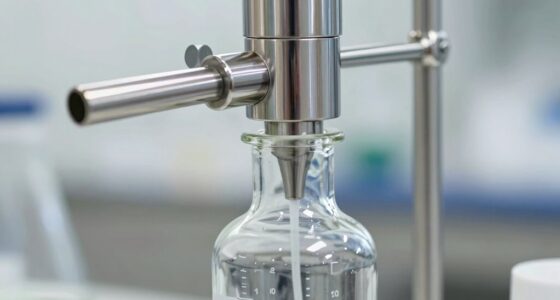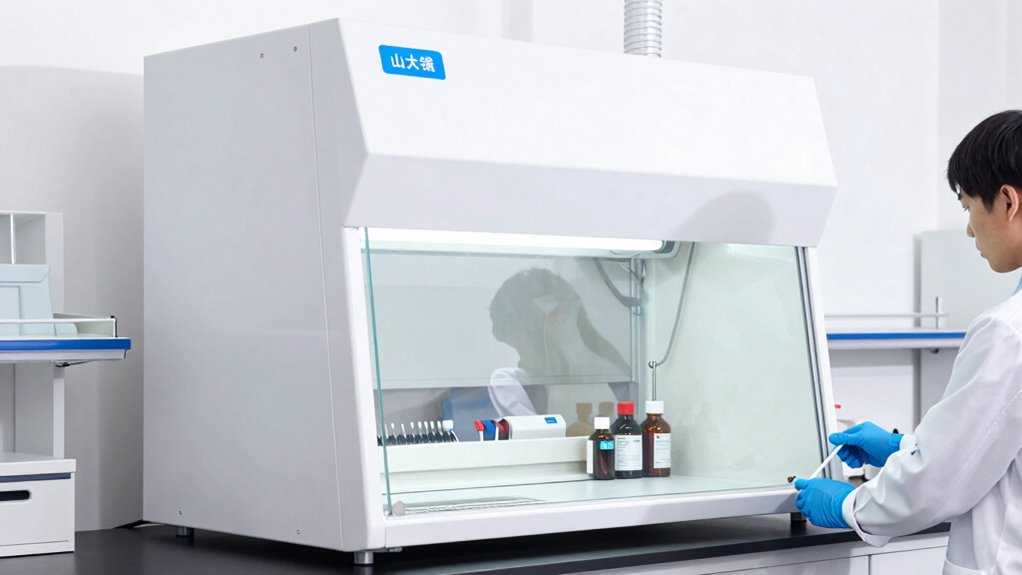

A ductless fume hood can effectively contain and filter chemical vapors, fumes, and particulates using built-in air filtration systems like HEPA and activated carbon filters. It’s suitable for low to moderate hazard substances and doesn’t need external venting, making it ideal for small or space-constrained labs. However, it cannot handle highly toxic, corrosive, biological, or radioactive materials. To discover the full range of what these hoods can do, keep exploring.

Prime made for students and young adults
- Fast, free delivery for dorm and study essentials
- Prime Video and Amazon Music included
- Member-only deals
Key Takeaways
- Can effectively filter chemical vapors and particulate matter using built-in filters without external ductwork.
- Cannot handle highly toxic, corrosive, reactive, biological, or radioactive hazards.
- Suitable for low to moderate hazard substances in limited-space environments.
- Cannot replace traditional ventilation for high-risk or specialized safety requirements.
- Performance depends on proper maintenance, filter replacement, and unobstructed airflow.

Are ductless fume hoods a practical solution for your laboratory needs? These hoods are designed to protect you from hazardous fumes without the need for external ductwork. Instead of venting outside, they rely on built-in air filtration systems to clean contaminated air before releasing it back into your workspace. This can be especially useful if your lab has limited space, complex ventilation requirements, or budget constraints. However, understanding what a ductless fume hood can and cannot do is essential to guaranteeing safety and effectiveness.
When it comes to air filtration, ductless fume hoods excel at capturing a variety of chemical vapors, fumes, and particulate matter. The filtration units typically use activated carbon, HEPA filters, or a combination of both to trap contaminants. This process minimizes the risk of exposure and reduces reliance on external ventilation. But it’s important to recognize that air filtration has its limits. These systems are most effective with low to moderate hazard substances. For highly toxic, corrosive, or reactive chemicals, relying solely on a ductless fume hood may compromise safety. In such cases, traditional vented hoods or specialized containment systems are recommended.
Safety considerations go beyond just filtration. Proper operation and maintenance are essential. You need to guarantee filters are regularly inspected and replaced according to manufacturer guidelines to maintain efficiency. If filters become saturated or damaged, their ability to remove harmful fumes diminishes, potentially exposing you or others to dangers. Also, ductless fume hoods are not designed for all types of hazards. They are inadequate for handling biological agents, radioactive materials, or chemicals that require specialized safety protocols. In these situations, more complete containment measures are necessary. Additionally, air filtration effectiveness can be compromised if filters are not maintained properly, which underscores the importance of routine checks. Implementing a maintenance schedule ensures the continued safety and functionality of the filtration system. Proper training on safe usage guidelines is crucial for users to operate these hoods correctly and avoid accidental exposure. Moreover, understanding the limitations of filtration helps ensure you choose the appropriate safety measures for your specific laboratory environment.
Furthermore, the overall performance of a ductless fume hood can be impacted by external factors such as airflow obstructions or improper placement, which can reduce filtration efficiency and safety.
ductless fume hood with HEPA and activated carbon filters
As an affiliate, we earn on qualifying purchases.
As an affiliate, we earn on qualifying purchases.
Frequently Asked Questions
Are Ductless Fume Hoods Suitable for All Chemical Types?
Ductless fume hoods aren’t suitable for all chemical types because chemical compatibility varies. You need to check if the air filtration system can effectively remove specific vapors or fumes. If the chemicals produce highly hazardous or corrosive fumes, a ductless hood may not provide sufficient air filtration efficiency or containment. For such chemicals, consider a ducted hood to guarantee safety and proper containment.
How Often Should the Filters Be Replaced?
You should replace the filters in your ductless fume hood based on filter maintenance and recommended replacement intervals, which typically range from every 6 to 12 months. Regularly check for signs of clogging or odor, as these indicate it’s time for a change. Proper maintenance guarantees effective contaminant removal and safe operation. Keep track of usage and follow manufacturer guidelines to maintain peak performance.
Can Ductless Hoods Be Used Outdoors?
You can use ductless hoods outdoors, but with caution. Outdoor ventilation can help disperse fumes, yet you must consider chemical compatibility with the hood’s filters and materials. Environmental factors like wind and weather may affect containment and safety. Confirm the hood’s filters are suitable for outdoor use, and always check manufacturer guidelines. Properly evaluating these factors helps maintain safe, effective operation outside.
What Is the Maximum Airflow Capacity?
You’re asking about the maximum airflow capacity of a ductless fume hood. Typically, it ranges from 100 to 300 cubic feet per minute (CFM), depending on the model. Airflow measurement is essential to guarantee proper ventilation efficiency, preventing hazardous fumes from escaping. While it’s like trying to catch water with a sieve, selecting a hood with adequate airflow capacity guarantees safety, keeping contaminants contained and your workspace secure.
Are There Size Limitations for Installation?
You need to take into account installation limitations, as ductless fume hoods come in specific sizes that fit certain laboratory spaces. Always evaluate installation considerations to ensure proper fit and accessibility. Additionally, you must adhere to safety compliance standards, which may restrict the size depending on ventilation requirements and laboratory setup. Proper sizing ensures effective containment and safe operation, helping you maintain a compliant and efficient workspace.
chemical fume hood for low hazard substances
As an affiliate, we earn on qualifying purchases.
As an affiliate, we earn on qualifying purchases.
Conclusion
So, while a ductless fume hood might not turn you into a superhero or make your lab perfectly odor-free forever, it’s pretty close. It can effectively trap fumes and keep hazardous gases at bay, giving you peace of mind—almost like having a personal, invisible force field. Just remember, it’s not magic, but with proper use, it’ll make your workspace safer and more comfortable, transforming your lab experience from chaos to calm in no time.
laboratory air filtration system
As an affiliate, we earn on qualifying purchases.
As an affiliate, we earn on qualifying purchases.
maintenance kit for ductless fume hood
As an affiliate, we earn on qualifying purchases.
As an affiliate, we earn on qualifying purchases.
Fall Picks
fall essentials
As an affiliate, we earn on qualifying purchases.