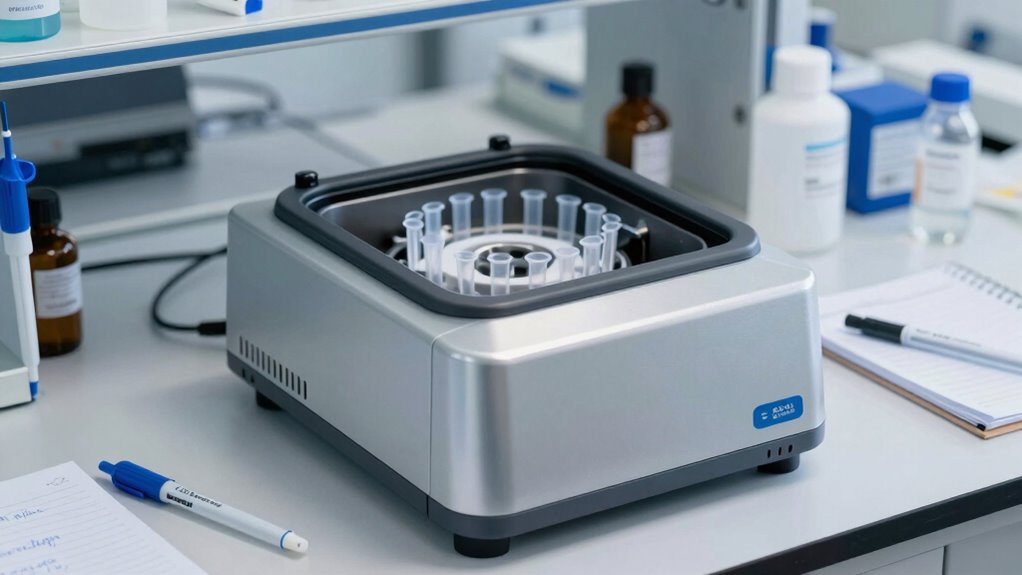

Benchtop centrifuges are ideal for small labs because they fit comfortably on your workspace and support quick sample prep without clutter. They are versatile, handling different rotor types, sample volumes, and multiple samples at once, which speeds up your workflow. Their reliable performance guarantees precise separation and consistent results. With easy maintenance, safety features, and straightforward operation, these units integrate smoothly into your routine tasks. Keep exploring to discover how you can optimize your lab’s efficiency even further.

Prime made for students and young adults
- Fast, free delivery for dorm and study essentials
- Prime Video and Amazon Music included
- Member-only deals
Key Takeaways
- Compact design maximizes workspace while supporting routine sample preparation tasks efficiently.
- Versatile rotor compatibility handles various sample types and volumes, streamlining multiple workflows.
- Easy integration with existing lab setups facilitates quick sample processing without clutter.
- User-friendly operation ensures quick setup and reliable results for routine biological sample separation.
- Regular maintenance and safety features ensure consistent performance and equipment longevity in small labs.
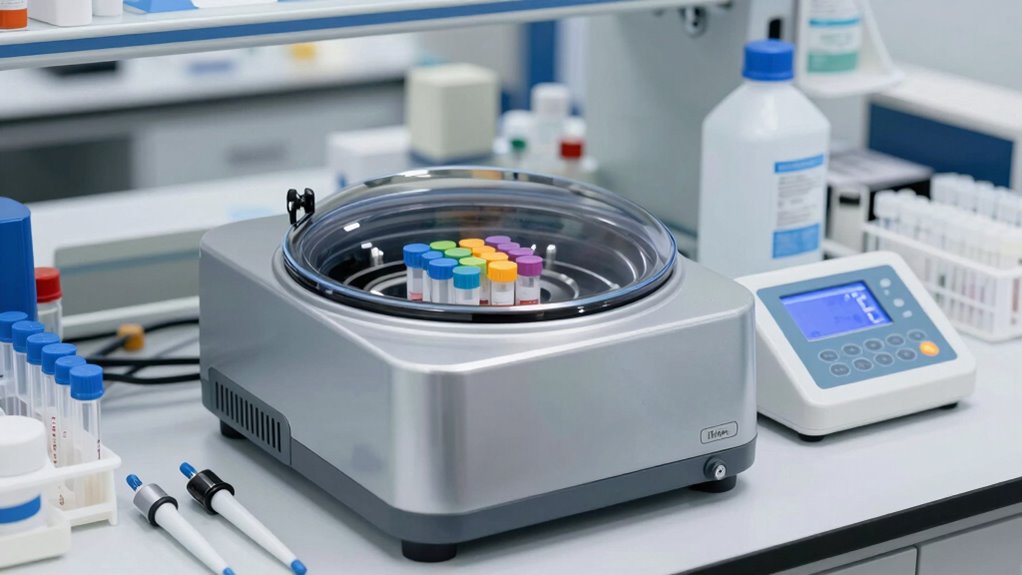
If your small lab needs reliable sample separation without taking up too much space, benchtop centrifuges are an ideal solution. These compact devices are designed to fit comfortably on your lab bench, offering quick and efficient sample preparation without sacrificing valuable workspace. Their user-friendly operation simplifies routine tasks, allowing you to process multiple samples swiftly, which is essential when managing tight schedules and limited personnel. With their small footprint, you can easily integrate a benchtop centrifuge into your existing workflow, streamlining processes from initial sample loading to final separation.
Sample preparation often requires precise and consistent centrifugation to guarantee reliable results. Benchtop centrifuges provide the necessary speed and control to separate components effectively, whether you’re working with blood, urine, or other biological samples. They support various rotor types and sizes, giving you flexibility depending on your specific needs. This versatility means you can handle different sample volumes and types without investing in multiple specialized units. As a result, your workflow becomes more efficient, reducing delays caused by equipment limitations. Proper maintaining your equipment also enhances sample integrity and prolongs its lifespan. Regular calibration and adherence to manufacturer guidelines help ensure optimal performance and trustworthy results. Additionally, understanding air quality can help in maintaining a cleaner environment around sensitive equipment, reducing the risk of contamination.
Maintaining your benchtop centrifuge is straightforward if you follow proper maintenance protocols. Regular cleaning of rotors and sample chambers prevents contamination and guarantees smooth operation. Always check for signs of wear or damage, such as corrosion or cracks, and replace parts as recommended by the manufacturer. Lubricating moving parts periodically helps maintain peak performance and extends the lifespan of your equipment. Calibration is vital too; routinely verifying speed accuracy ensures consistent sample separation and trustworthy results. Keeping a maintenance log simplifies tracking service schedules and helps you stay on top of routine upkeep, minimizing unexpected breakdowns. Furthermore, equipment longevity can be supported by implementing proper storage practices and avoiding exposure to extreme temperatures. Proper maintenance also involves ensuring the centrifuge’s safety features are functioning correctly, which is essential for safe operation. Implementing routine inspections can further catch potential issues early and prevent costly repairs or downtime.
Popular right now

Sony WH-1000XM6 Wireless Noise-Canceling Headphones, Black

Samsung S85H 48-Inch 4K OLED Smart TV (2026)

Vitamix Propel Series 510 Professional-Grade Blender, 48 oz, Slate
As an affiliate, we earn on qualifying purchases.
Frequently Asked Questions
What Are the Maintenance Requirements for Benchtop Centrifuges?
You need to regularly perform calibration procedures on your benchtop centrifuge to guarantee accuracy and reliability. Keep the rotor and chamber clean and check for any signs of wear or damage. Always follow safety guidelines to protect yourself during maintenance. Additionally, periodically inspect the lid lock and electrical connections. Proper maintenance not only guarantees user safety but also prolongs the lifespan of your centrifuge, ensuring consistent, precise results.
How Energy-Efficient Are These Centrifuges?
You might be surprised by how energy-efficient benchtop centrifuges are. With optimized energy consumption and advanced efficiency metrics, these devices minimize power use without sacrificing performance. They often feature energy-saving modes and precise controls, making them a smart choice for small labs aiming to cut costs and reduce environmental impact. Their low energy footprint guarantees you get reliable results while keeping operational expenses and energy waste to a minimum.
Can They Handle Hazardous or Biohazardous Samples Safely?
Benchtop centrifuges can handle hazardous or biohazardous samples safely if you follow strict biohazard safety protocols. Always use proper containment, secure lids, and wear personal protective equipment. Make certain the centrifuge has safety features like a sealed rotor lid and automatic shut-off. Regularly decontaminate the equipment and handle samples in designated biosafety cabinets when necessary. Following these steps minimizes risks and guarantees safe hazardous sample handling.
What Is the Typical Lifespan of a Benchtop Centrifuge?
A benchtop centrifuge typically lasts between 5 to 10 years, depending on your usage, maintenance, and model quality. Its durability hinges on proper care and regular servicing, preventing wear and tear. Keep in mind, the sample capacity influences longevity; larger capacities may strain the motor more, potentially shortening lifespan. With diligent upkeep, you can maximize your centrifuge’s durability and get the most value from your investment.
Are There Specific Certifications or Standards to Look For?
You should look for benchtop centrifuges with certification standards like UL, CE, or CSA, which guarantee they meet safety regulations. These certifications demonstrate the equipment’s compliance with safety and performance standards, reducing risks in your lab. Always verify that the centrifuge adheres to recognized safety regulations to protect users and ensure reliable operation. Prioritizing certified models helps maintain a safe and compliant small lab environment.
Conclusion
In small labs, benchtop centrifuges streamline your workflow, saving space and boosting efficiency. With their compact design, you can process up to 20 samples simultaneously, reducing turnaround time. Imagine handling 50% more samples in half the time—your lab becomes more productive and responsive. These versatile devices are essential for precise separation tasks, making your daily operations smoother and more reliable. Embrace benchtop centrifuges and transform your lab’s capabilities today.