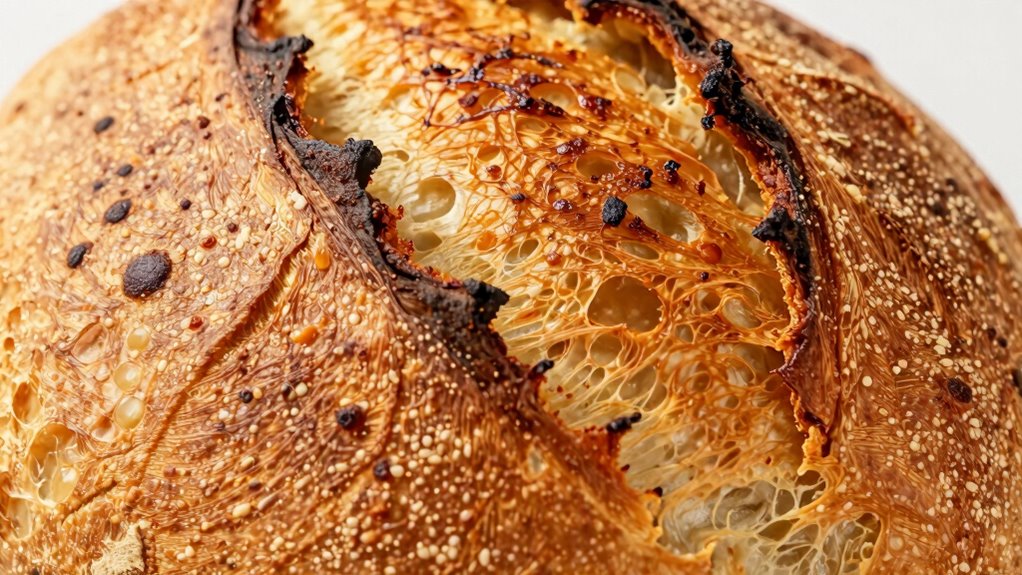

The crust tastes different than the center because it experiences higher temperatures during baking, causing the Maillard reaction that creates toasty, caramel-like flavors and browning. Moisture escapes from the crust, concentrating sugars and amino acids, while the soft center stays moist and mild. This temperature and moisture difference results in a complex flavor in the crust and a lighter, less intense flavor inside. To uncover more about what makes each part unique, keep exploring these baking secrets.

Prime made for students and young adults
- Fast, free delivery for dorm and study essentials
- Prime Video and Amazon Music included
- Member-only deals
Key Takeaways
- The crust develops a richer, more complex flavor due to Maillard browning and caramelization from higher surface temperatures.
- Moisture loss concentrates sugars and amino acids in the crust, enhancing its flavor profile.
- The interior remains moist, soft, and less browned, resulting in a milder, doughy taste.
- Heat exposure causes the crust to undergo chemical reactions that produce toasty, caramel-like flavors.
- The crust’s exposure to higher temperatures and dry conditions intensifies flavor development compared to the moist center.
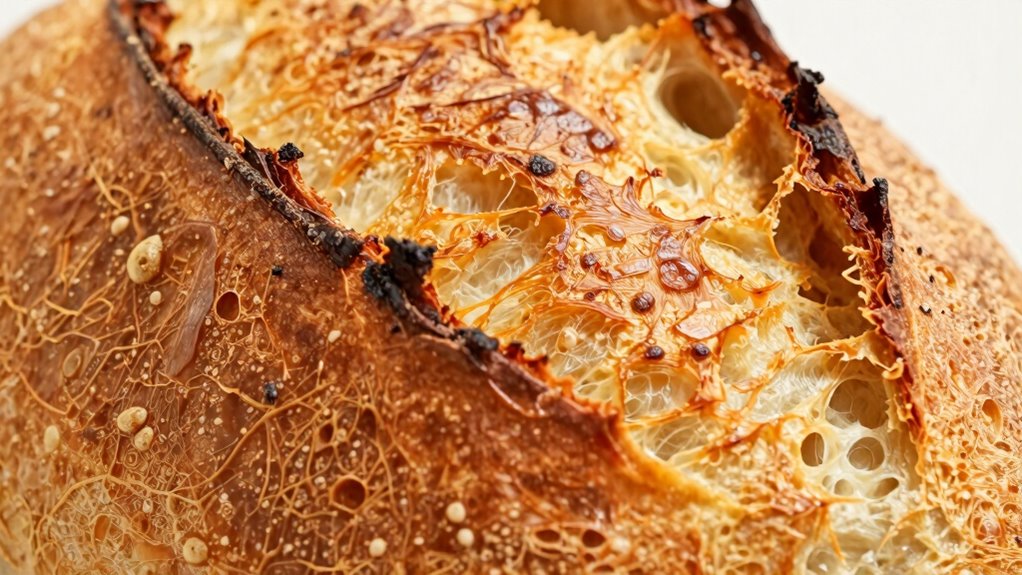
When you bite into a loaf of bread, you might notice that the crust tastes quite different from the soft center. This difference mainly comes down to how each part of the bread is formed during baking. The crust forms a barrier where complex chemical reactions take place, giving it that distinctive flavor and texture, while the center remains soft and chewy. One key factor influencing this contrast is gluten development. During mixing, gluten proteins in the dough align and form a network that traps air and moisture, giving the bread its structure. As the bread bakes, this gluten network continues to strengthen, especially in the interior, where moisture is abundant. The result is a tender, airy crumb that retains moisture but doesn’t develop the same rich flavors as the crust.
Gluten development forms the bread’s structure, creating a tender crumb that retains moisture but lacks the crust’s rich flavor.
The crust’s unique taste largely stems from the Maillard reaction—a chemical process that occurs when heat causes amino acids and sugars to react, creating new flavor compounds and browning the surface. As the bread bakes, the outer layer is exposed to high temperatures, prompting this reaction to happen intensely. The Maillard reaction produces those toasty, caramel-like flavors that define a good crust, setting it apart from the milder, blander flavor of the bread’s center. Because the crust is exposed to direct heat and loses moisture more rapidly than the interior, it browns faster and develops a richer, more complex flavor profile.
Temperature plays an essential role here. The surface of the bread reaches higher temperatures than the interior, facilitating the Maillard reaction. Meanwhile, the inside remains relatively moist and under-browned, preserving its softness. The difference in moisture content between the crust and the crumb further influences flavor development. As moisture escapes from the crust, it concentrates sugars and amino acids, intensifying the Maillard reaction. The softer center, with higher moisture levels, doesn’t undergo this browning process to the same extent, so it tastes milder and retains a neutral, doughy flavor. Additionally, gluten development during baking provides the necessary structure that supports the formation of the crust and crumb.
In essence, the distinct flavors of bread’s crust and center come from the interplay of gluten development, which provides structure, and the Maillard reaction, which enhances flavor through browning. The crust’s exposure to high heat and rapid moisture loss creates a flavorful, crispy exterior, while the interior remains soft, moist, and subtly flavored. That’s why biting into a loaf reveals this delightful contrast: a crispy, flavorful crust that’s worlds apart from the tender, mild center.
As an affiliate, we earn on qualifying purchases.
Frequently Asked Questions
Does the Type of Bread Affect Crust Flavor?
Yes, the type of bread affects crust flavor. Different bread type variations, like sourdough or baguettes, have unique ingredients and baking methods that influence crust taste. Crust ingredient influences, such as added sugars, fats, or seeds, also impact flavor. You’ll notice that crusts from whole grain breads or those with toppings often taste richer or more complex than simple white bread. Overall, the bread’s ingredients and baking process shape its crust flavor markedly.
How Does Baking Temperature Influence Crust Taste?
Baking temperature markedly influences crust taste by activating the Maillard reaction and caramelization process. When you bake at higher temperatures, these chemical reactions occur more rapidly, developing richer, deeper flavors and a crispier crust. Conversely, lower temperatures slow down these processes, resulting in a milder, softer crust. So, by adjusting your oven’s heat, you control how intensely the crust develops flavors, making your bread either more or less caramelized and flavorful.
Can Humidity Change the Crust’s Flavor Profile?
Imagine the aroma of freshly baked bread filling your kitchen; humidity can subtly change that experience. Higher humidity levels keep the crust moisture-rich, softening its crunch and mellowing its flavor. This moisture impacts fermentation effects, slowing crust browning and altering taste. Conversely, lower humidity dries the crust, intensifying its caramelization and flavor. So, humidity directly influences the crust’s texture and flavor profile, making each loaf uniquely delicious.
Does the Thickness of the Crust Alter Its Taste?
Yes, the thickness of the crust can alter its taste. Thicker crusts tend to have a more pronounced crust aroma and a different crust texture, which can enhance or mellow flavors. A thinner crust might be crisper and less aromatic, letting the bread’s interior shine. You notice these differences when biting into the bread, feeling the contrast in texture and aroma, making each slice uniquely enjoyable.
How Does Storage Method Impact Crust Flavor?
Storing bread improperly can change its crust flavor by affecting crust texture and aroma. When you leave bread exposed to air, it loses moisture, making the crust crispier and more aromatic, but it also risks staling faster. Conversely, wrapping bread in plastic traps moisture, softening the crust and dulling its aroma. To preserve the ideal crust flavor, store bread in a paper bag or loosely wrapped container, balancing moisture retention and crust texture.
As an affiliate, we earn on qualifying purchases.
Conclusion
In the end, understanding why bread crust tastes different from the center is like revealing a secret recipe hidden in the oven’s heat. The crust, kissed by high temperatures, becomes a flavorful frontier, while the soft center remains a gentle soul. By appreciating these contrasting personalities, you’ll see bread not just as food, but as a symphony of textures and flavors, each note playing its part in a delicious harmony that dances on your taste buds.
As an affiliate, we earn on qualifying purchases.
As an affiliate, we earn on qualifying purchases.
Halloween Picks
halloween
As an affiliate, we earn on qualifying purchases.