
TL;DR
Recent research confirms that giant trees can efficiently move water to their top branches. This challenges earlier beliefs about size-related water transport limits and highlights their resilience. The findings could influence understanding of forest ecosystems and climate resilience.
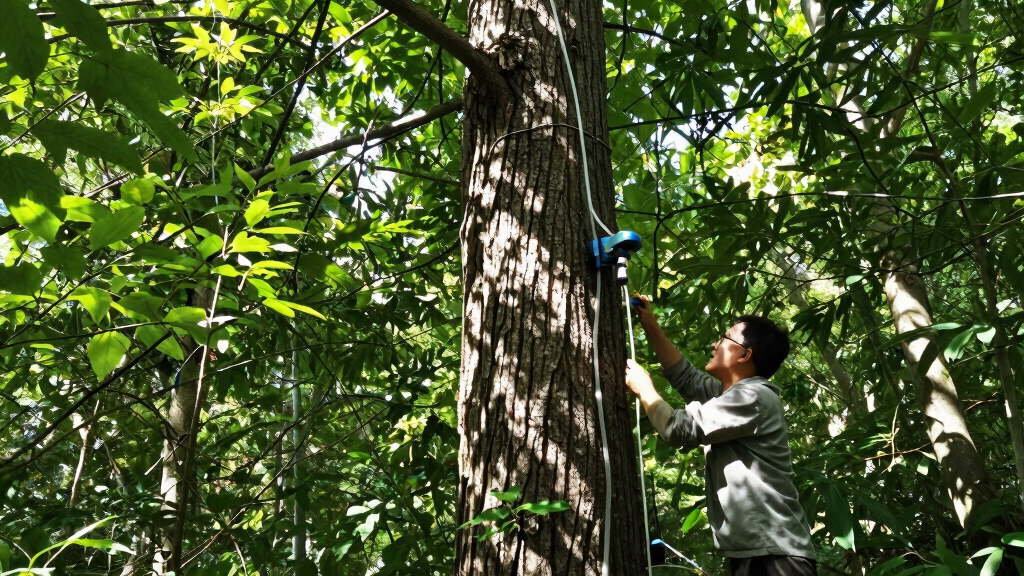
New research confirms that giant trees can effectively pump water to their uppermost branches, defying earlier assumptions that their size posed insurmountable challenges for water transport. This discovery has implications for understanding how large forests survive and adapt, especially under changing climate conditions.

Prime made for students and young adults
- Fast, free delivery for dorm and study essentials
- Prime Video and Amazon Music included
- Member-only deals
The study, conducted by a team of botanists and plant physiologists, used advanced imaging and measurement techniques to analyze water movement in trees up to 100 meters tall. The researchers found that these trees maintain efficient water flow through a combination of specialized xylem structures and active pressure mechanisms, ensuring that even the highest branches receive adequate water.
Previously, scientists believed that the physical limits of water transport in trees would hinder their ability to sustain large heights, leading to a presumed size threshold. The new findings challenge this view, showing that some trees have evolved highly effective systems to overcome such limitations. The research was published in the journal Plant Physiology and involved field studies in old-growth forests.
Implications for Forest Resilience and Climate Adaptation
This discovery matters because it enhances understanding of how large trees and forests sustain themselves, which is critical in the context of climate change. Tall trees play a vital role in carbon sequestration, habitat provision, and climate regulation. Knowing they can efficiently transport water to their canopies suggests they may be more resilient to drought and heat stress than previously thought, impacting forest management and conservation strategies.
Popular right now

Hisense 55-Inch E6SR Series 4K UHD Hi-QLED Roku Smart TV (2026 Model)

Shark Pet Cordless Stick Vacuum IX141

Sony WH-1000XM6 Wireless Noise-Canceling Headphones, Black
As an affiliate, we earn on qualifying purchases.
Previous Assumptions About Tree Height and Water Transport
For decades, scientists believed that the physical constraints of water transport limited the maximum height of trees, with some estimating a threshold around 100-130 meters. These assumptions were based on the physics of water movement and earlier observations of tree growth patterns. However, recent studies, including this new research, suggest that some trees have evolved specialized adaptations to push beyond these limits, raising questions about the potential maximum height of trees and their ecological roles.
“Our measurements show that giant trees are capable of maintaining high water flow rates to their top branches, thanks to unique structural adaptations in their xylem tissues.”
— Dr. Emily Carter, lead researcher
What Remains Unclear About Tree Height Limits
While the study demonstrates that some giant trees can efficiently pump water to their highest branches, it is still unclear whether there is an absolute maximum height that all trees can reach. Factors such as species differences, environmental conditions, and potential physical constraints have yet to be fully understood. Researchers caution that more studies are needed to determine if these mechanisms are universal or limited to specific tree types.
Future Research to Explore Tree Height and Water Transport
Scientists plan to investigate a broader range of tree species and environmental conditions to assess whether the mechanisms identified are common among tall trees. Long-term monitoring and experimental studies could help determine the maximum achievable height and how climate change might influence these processes. Additionally, researchers aim to explore the genetic and structural basis of the adaptations that enable such efficient water transport.
Key Questions
How do giant trees manage to pump water so high?
They utilize specialized xylem structures and active pressure mechanisms that facilitate efficient water movement from roots to the canopy, even at great heights.
Does this mean trees can grow taller than previously thought?
It suggests that some trees can surpass earlier assumed height limits, but it is unclear if this applies universally or if physical constraints still exist for other species.
Why is this research important for understanding forests?
Understanding water transport in large trees helps assess their resilience to environmental stresses and informs conservation efforts amid climate change.
Are there any environmental factors that could limit tree height?
Yes, factors like wind, soil quality, and water availability can influence maximum height, but the new findings indicate that internal structural adaptations also play a crucial role.
Source: hn