TL;DR

Get school and study supplies delivered free — and shop member deals
- Fast, free delivery on millions of items
- Access to Prime Big Deal Days deals on October 6–7
- Prime Video, Amazon Music and more included
A significant solar storm has triggered widespread polarlicht displays across northern Europe. Scientists confirm increased geomagnetic activity, but the duration of the event remains uncertain. This development impacts both scientific monitoring and public interest in space weather phenomena.
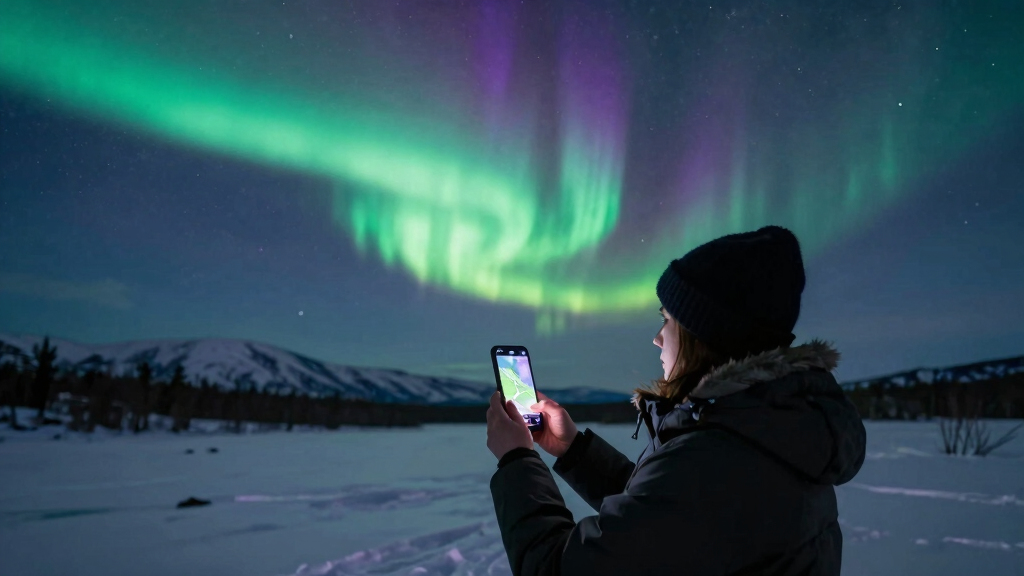
Strong polarlicht displays have been observed across northern Europe following a recent solar storm, confirmed by space weather agencies. This event is notable for its intensity and widespread visibility, attracting both scientific interest and public attention. The solar storm, caused by a coronal mass ejection from the sun, has led to increased geomagnetic activity that is expected to persist over the next few days.
According to the European Space Agency (ESA) and the NOAA Space Weather Prediction Center, a coronal mass ejection (CME) was detected on April 23, 2024, originating from an active sunspot region. The CME reached Earth on April 25, triggering geomagnetic storms classified as G3 (strong) on the NOAA scale. These storms have resulted in vivid polarlicht displays observable from northern countries such as Norway, Sweden, Finland, and parts of Canada.
Experts confirm that the auroras have been particularly intense, with some reports describing them as reaching the highest levels of visibility in recent years. The phenomenon is caused by charged particles from the solar wind interacting with Earth’s magnetic field, producing the characteristic light displays. The current activity is expected to continue through at least April 27, with scientists closely monitoring space weather forecasts for potential escalation or decline.
Why the Solar Storm and Auroras Matter to the Public and Scientists
This event highlights the ongoing impact of solar activity on Earth, affecting communication systems, satellite operations, and power grids. For the public, the vivid polarlicht displays offer a rare visual spectacle and increased interest in space weather phenomena. For scientists, the event provides an opportunity to study geomagnetic responses to solar eruptions, improving prediction models for future space weather events that could have more serious technological consequences.
northern lights viewing binoculars
As an affiliate, we earn on qualifying purchases.
As an affiliate, we earn on qualifying purchases.
Recent Solar Activity and Its Impact on Earth
The sun has been experiencing heightened activity over the past month, including multiple solar flares and CME events. The latest CME, detected on April 23, is among the strongest observed this year. Historically, similar solar storms have caused disruptions in radio communications and power systems, though current infrastructure is resilient to moderate geomagnetic disturbances. The aurora borealis, or polarlicht, is a natural consequence of such solar activity, regularly visible during geomagnetic storms in high-latitude regions.
“The intensity of this geomagnetic storm is quite remarkable, and the auroras are visible much farther south than usual. It’s an excellent opportunity for scientific observation and public engagement.”
— Dr. Laura Jensen, ESA Solar Physics Expert
As an affiliate, we earn on qualifying purchases.
Uncertainties About the Duration and Impact of the Storm
While current observations confirm intense auroras and geomagnetic activity, it remains unclear how long the storm will last or whether it will intensify further. Scientists are also assessing potential impacts on satellite communications and power grids, but no major disruptions have been reported yet. The precise evolution of the solar storm depends on solar wind conditions and Earth’s magnetic response, which are still being monitored.
warm insulated winter jacket for aurora viewing
As an affiliate, we earn on qualifying purchases.
As an affiliate, we earn on qualifying purchases.
Next Steps in Monitoring and Public Information
Scientists will continue to track solar activity and geomagnetic responses over the coming days. Space weather agencies will update forecasts regularly, and authorities in affected regions may issue advisories if necessary. Public interest is expected to remain high, especially in northern latitudes where auroras are visible. Researchers aim to better understand the storm’s progression and potential impacts for future preparedness.
portable travel tripod for night sky photography
As an affiliate, we earn on qualifying purchases.
As an affiliate, we earn on qualifying purchases.
Key Questions
What causes the polarlicht displays during solar storms?
Polarlicht displays occur when charged particles from the solar wind interact with Earth’s magnetic field, producing visible light in the upper atmosphere, especially during geomagnetic storms caused by solar eruptions.
How intense is the current solar storm?
Space weather agencies classify the current geomagnetic storm as G3 (strong), leading to vivid auroras visible in northern Europe and parts of North America.
Will the auroras be visible in my area?
Visibility depends on your geographic location and local weather conditions. Northern countries like Norway, Sweden, Finland, and parts of Canada are currently experiencing the best viewing conditions.
Could this solar storm cause technological disruptions?
While moderate geomagnetic storms can affect satellite operations and power grids, no major disruptions have been reported so far. Monitoring continues to assess potential risks.
When will the geomagnetic activity subside?
Current forecasts suggest the activity may persist through April 27, but the intensity could decrease sooner depending on solar wind conditions.
Source: google-trends
Halloween Picks
halloween
As an affiliate, we earn on qualifying purchases.





![Competitive Programmer's Handbook (2018) [Pdf]](https://varietychem.com/wp-content/uploads/2026/10/competitive-programmer-s-handbook-2018-pdf-featured-260x140.jpg)