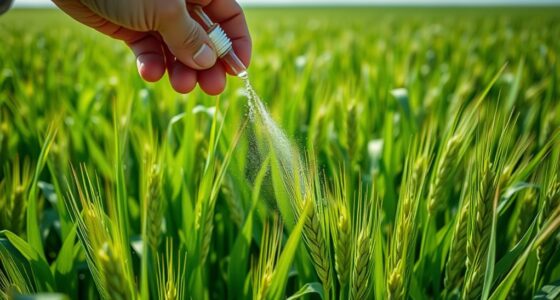

You can see that hormone balance plays a key role in shaping plant architecture by regulating root growth, leaf development, and overall structure. Auxins promote root elongation and leaf cell expansion, while cytokinins help balance root and shoot growth. Gibberellins and brassinosteroids influence size and shape, and abscisic acid responds to stress. When these hormones are in harmony, your plant develops a sturdy, efficient form. Keep exploring to understand how this balance impacts plant health and adaptation.
Key Takeaways
- Hormonal balance regulates root elongation and branching, determining overall root system architecture.
- Auxins and cytokinins coordinate leaf size and shape, influencing photosynthesis efficiency.
- Proper hormone levels ensure balanced growth between roots and shoots for optimal plant structure.
- Imbalanced hormones can lead to abnormal plant morphology, affecting stability and resource uptake.
- Environmental cues modulate hormone signals, adapting plant architecture to changing conditions.
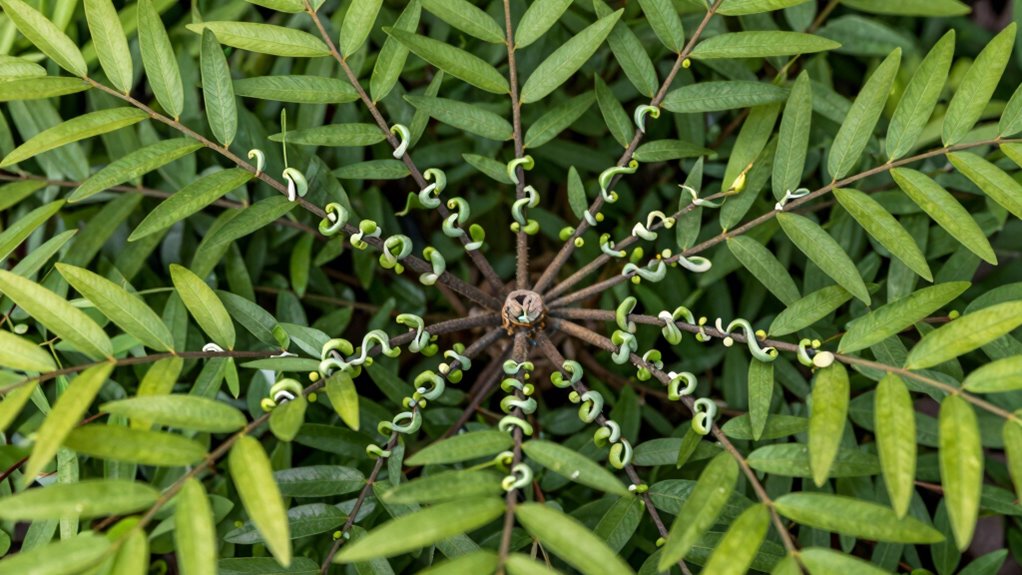
Understanding how hormones regulate plant growth is vital to grasping how plants develop their architecture. Hormones act as chemical messengers, coordinating various growth processes to shape the overall structure of a plant. When you look at a plant, its root development and leaf morphology are prime examples of how hormone balance influences shape and function. These two aspects are interconnected, with hormones orchestrating their growth patterns to optimize the plant’s ability to absorb nutrients and sunlight.
Root development, for instance, is heavily influenced by hormones like auxins. When auxin levels increase in the root tip, you’ll notice enhanced elongation and branching. This hormone directs the growth of lateral roots, allowing the plant to explore the soil more efficiently. Conversely, when auxin distribution shifts, it can suppress root growth or promote the development of specific root types, adjusting the plant’s anchorage and nutrient uptake capabilities. Cytokinins also play a part here; they work in tandem with auxins to balance root and shoot growth. High cytokinin activity in the roots can suppress root elongation while encouraging shoot growth, ultimately affecting the plant’s overall architecture.
Auxins promote root elongation and branching, while cytokinins balance root and shoot growth for optimal plant architecture.
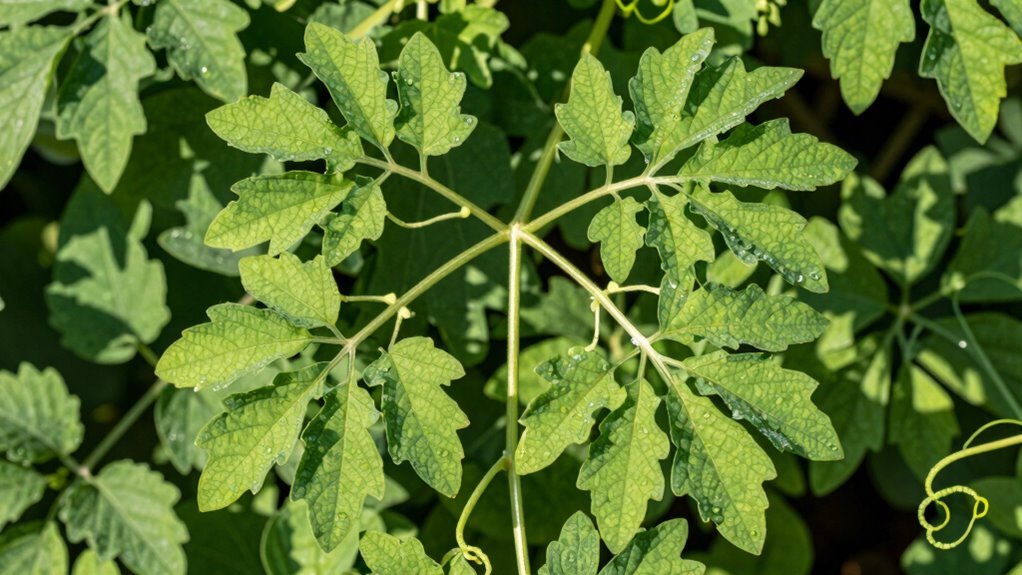
Leaf morphology, on the other hand, is shaped by a different set of hormonal signals. Auxins influence leaf formation by affecting cell expansion and differentiation, leading to variations in leaf size and shape. You might notice that variations in hormone levels result in broader, narrower, or more elongated leaves, which can help the plant adapt to its environment. Gibberellins also contribute by promoting cell division and elongation in leaves, influencing their size and thickness. Meanwhile, abscisic acid plays a role in leaf development during stress conditions, often causing leaves to become smaller or more curled to conserve water and energy. Additionally, natural plant hormones like brassinosteroids are involved in regulating cell expansion and overall plant architecture, further emphasizing the importance of hormone balance. Furthermore, research shows that hormonal signaling pathways are crucial in integrating environmental cues with internal growth regulation.
The balance between these hormones determines how a plant invests energy into different parts, shaping its architecture from the root system to the canopy. If auxin levels are skewed, root growth might become excessive or sparse, affecting stability and nutrient absorption. Similarly, an imbalance in hormones affecting leaf development can result in a plant with overly large or stunted leaves, impacting photosynthesis efficiency. Fundamentally, maintaining the right hormonal balance is essential for the plant to develop a sturdy, functional architecture that suits its environment. By understanding how these hormones influence root development and leaf morphology, you gain insight into the complex yet elegant regulation behind plant form and growth.
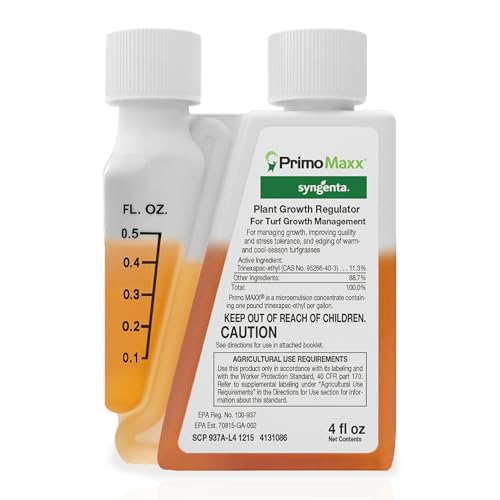
Primo Maxx Plant Growth Regulator
- Eases maintenance of tough turf areas: Reduces need for edging and mowing
- Enhances drought resistance: Multiple applications lower water usage
As an affiliate, we earn on qualifying purchases.
As an affiliate, we earn on qualifying purchases.
Frequently Asked Questions
How Do Environmental Factors Influence Hormone Levels in Plants?
Environmental triggers like light, gravity, and water availability directly influence hormone regulation in plants. When exposure to light increases, you’ll notice auxin distribution shifts, promoting growth on specific sides. Gravity causes auxin to move downward, affecting root and shoot development. Water stress triggers abscisic acid production, helping plants adapt. By responding to these environmental cues, you help regulate hormone levels, ensuring your plant adapts properly and maintains healthy growth and architecture.
Can Hormone Imbalance Cause Plant Diseases or Pests?
Yes, hormone imbalance can lead to plant diseases or pests. When hormone levels are off, plants become weak and less resistant to pests, reducing pest resistance. This imbalance may also mimic symptoms that encourage pest infestation or disease development. You might consider hormone therapy to restore balance, strengthening your plant’s natural defenses and improving overall health, which helps prevent pest attacks and disease spread.
Are There Natural Methods to Modify Plant Hormone Levels?
Yes, you can naturally modify plant hormone levels through herbal remedies and genetic modification. Herbal remedies, like applying extracts from certain plants, can influence hormone production and balance. Additionally, genetic modification allows you to alter genes responsible for hormone synthesis, leading to desired plant traits. These methods are eco-friendly and sustainable, helping you promote healthier plant growth and architecture without synthetic chemicals.
How Quickly Do Plants Respond to Changes in Hormone Balance?
You’ll see plant responses to hormone balance changes within hours to days. Hormone signaling triggers growth regulation processes quickly, leading to noticeable effects like altered leaf shape, stem elongation, or root growth. When hormone levels shift, the plant’s cellular activities adapt rapidly, especially in sensitive tissues. This swift response helps the plant optimize its architecture for environmental conditions, ensuring better growth and survival.
Do All Plant Species Rely Equally on Hormones for Architecture?
Not all plant species rely equally on hormones for their architecture. Due to hormone diversity and species variation, some plants depend heavily on hormones like auxins and cytokinins to shape growth, while others use different mechanisms. You’ll notice that certain species respond more dramatically to hormone changes, affecting their branching and overall structure. Understanding this variation helps you appreciate how diverse plant architectures develop based on unique hormonal balances.

Darzheoy 4PC Plant Growth Enhancer Supplement, Root Stimulator, Nutrient Supplement Fertilizer Enhancer Blend for Vegetative and Pre-Flowering Stage
- Rapid Root Absorption: Enhances soil fertility and promotes rooting
- Supports Healthy Plant Growth: Boosts growth during vegetative and pre-flowering stages
- Suitable for Various Plants: Ideal for flowers, succulents, saplings, and fruit trees
As an affiliate, we earn on qualifying purchases.
As an affiliate, we earn on qualifying purchases.
Conclusion
So, next time you marvel at a towering tree or a delicate flower, remember it’s all about the delicate dance of hormones guiding its form. Just as a maestro conducts an orchestra, these tiny chemical signals orchestrate plant architecture, shaping life itself. Without this balance, plants would be lost in chaos rather than flourishing in harmony. Truly, hormones are the silent architects of nature’s masterpiece—an intricate symphony you’re now more enthusiastic to understand.

6-BA Cytokinin Powder Plant Nutrient Supplement 450g Bottle, Boost Bud Development for Potted Flowers Ornamental Trees Vegetables Home Garden & Nursery Cultivation
- Product Type: 6-BA Cytokinin Powder for Plants
- Application Area: Home gardens, nurseries, landscapes
- Suitable Plants: Flowers, potted plants, trees, vegetables
As an affiliate, we earn on qualifying purchases.
As an affiliate, we earn on qualifying purchases.

Boca Hydro Low Tide Liquid Seaweed Extract Organic Kelp Fertilizer Natural Plant Growth Booster with Amino Acids Humic Acid Vitamins & Trace Minerals for Stronger Roots Leaves & Blooms (32 Ounce)
- Enhances Root Development: Stimulates cell division for stronger roots
- Supports Foliage Growth: Increases chlorophyll for darker, thicker leaves
- Boosts Plant Resilience: Improves resistance to drought, heat, and frost
As an affiliate, we earn on qualifying purchases.
As an affiliate, we earn on qualifying purchases.