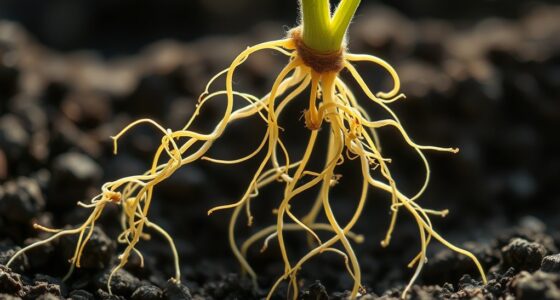

Natural plant hormones are produced within the plant and are identical to those naturally occurring, but they are often costly and time-consuming to extract. Synthetic hormones are artificially made in labs, offering consistent potency, stability, and the ability to produce stronger effects. They’re widely used in agriculture for precise control, while natural ones are preferred in organic farming. To discover more about how these options compare and their benefits, keep exploring.

Get school and study supplies delivered free — and shop member deals
- Fast, free delivery on millions of items
- Access to Prime Big Deal Days deals on October 6–7
- Prime Video, Amazon Music and more included
Key Takeaways
- Natural plant hormones are produced within the plant, while synthetic hormones are artificially created in labs.
- Natural hormones are identical to those found in plants, whereas synthetic ones may have slight modifications for enhanced effects.
- Extraction of natural hormones is complex and costly; synthetic hormones are mass-produced using chemical synthesis.
- Synthetic hormones are generally more stable, cost-effective, and easier to apply than natural hormones.
- Both types influence plant growth processes but are chosen based on factors like cost, safety, and desired efficacy.

Have you ever wondered how plants regulate their growth and development? It’s fascinating to realize that plants rely on hormones—biochemical messengers—that coordinate everything from seed germination to flowering and fruiting. Understanding the difference between natural and synthetic plant hormones can help you make informed decisions in gardening, agriculture, or research. Natural plant hormones are produced within the plant itself, and their production involves hormone extraction from plant tissues. These hormones, like auxins, gibberellins, cytokinins, abscisic acid, and ethylene, are naturally occurring compounds that play crucial roles in regulating plant processes. When you work with natural hormones, you’re fundamentally harnessing compounds that are identical to those the plant produces. However, extracting these hormones can be complex, requiring careful hormone extraction methods to isolate pure compounds from plant tissues. This process guarantees the hormone retains its biological activity, but it can be expensive and time-consuming. Additionally, hormone extraction often involves sophisticated techniques to ensure purity and effectiveness. In recent years, advancements in biotechnology have improved our ability to produce natural hormones more efficiently and sustainably.
Synthetic formulations, on the other hand, are artificially created in laboratories to mimic natural hormones’ effects. These synthetic plant hormones are designed to be more stable, easier to produce, and more cost-effective. When you opt for synthetic formulations, you’re using compounds that are chemically similar to natural hormones but may have slight modifications to enhance their efficacy or shelf life. They are often used in agriculture to promote uniform flowering or to control plant growth more precisely. The manufacturing process for synthetic hormones involves chemical synthesis, which allows for large-scale production and consistent potency. This makes them a popular choice for commercial applications where reliability and scalability are essential.
While natural hormones are identical to those produced by the plant, synthetic formulations can sometimes produce stronger or more targeted responses, making them useful in specific scenarios. Additionally, advancements in chemical synthesis have enabled the creation of more refined synthetic hormones, further expanding their applications. However, some growers prefer natural hormones for organic gardening or environmentally sensitive contexts, believing they’re safer for the ecosystem. Conversely, synthetic hormones offer convenience and control, especially when precise timing and dosage are critical. Both types have their advantages and limitations, and your choice depends on your goals, budget, and ethical considerations.
natural plant hormone supplements
As an affiliate, we earn on qualifying purchases.
As an affiliate, we earn on qualifying purchases.
Frequently Asked Questions
Are Synthetic Hormones More Potent Than Natural Ones?
Synthetic hormones are often more potent than natural ones because they have higher hormone stability, allowing them to remain active longer. They’re designed to mimic or enhance natural responses, which can lead to a potency comparison favoring synthetic options. However, this increased potency can also cause stronger or unintended effects. When using synthetic hormones, you should carefully consider their stability and potency to avoid over-application or adverse reactions in plants.
How Do Plant Hormones Affect Human Health?
A stitch in time saves nine, and understanding plant hormone interactions can help you stay healthy. Plant hormones can influence human health through food, affecting growth, mood, and immune responses. Certain hormones in plants, like phytoestrogens, mimic human hormones, impacting your well-being. While these interactions usually benefit health, overexposure might cause imbalances. Being mindful of your diet, rich in natural plant hormones, supports overall health and well-being.
Can Synthetic Hormones Replace Natural Plant Growth?
Synthetic hormones can replace natural plant growth temporarily, but they often have different hormone stability, leading to unpredictable effects over time. You’ll notice that plants absorb synthetic hormones more efficiently due to their designed chemical structures, which can speed up growth or flowering. However, long-term reliance might impact plant health or soil quality, so it’s vital to balance synthetic use with natural processes to guarantee healthy, sustainable growth.
Are Natural Hormones More Environmentally Friendly?
Yes, natural hormones are generally more eco-friendly because they offer benefits like natural degradation, meaning they break down more easily in the environment. This reduces the risk of pollution and harm to ecosystems. Since natural hormones are derived from plants, they tend to be less persistent and less likely to cause long-term environmental issues. Choosing natural hormones can support sustainable practices and help protect the environment.
Do All Plants Respond Equally to Synthetic Hormones?
Not all plants respond equally to synthetic hormones; imagine a garden where each flower dances differently to the same tune. Your plant’s response depends on hormone stability and application methods, which vary widely. Some species might be keenly soak up synthetic signals, thriving with quick growth, while others resist or show delayed reactions. Understanding these nuances helps you tailor hormone use, ensuring each plant’s unique needs are met effectively.
synthetic plant growth regulators
As an affiliate, we earn on qualifying purchases.
As an affiliate, we earn on qualifying purchases.
Conclusion
In the end, understanding the difference between natural and synthetic plant hormones helps you nurture plants more effectively. Natural hormones are like the gentle whispers of nature, guiding growth softly and harmoniously. Synthetic ones are powerful tools, like a conductor directing a grand symphony. Use them wisely, and you’ll see your plants thrive like a lush, unstoppable jungle. Remember, whether gentle or commanding, both types can transform your garden into a thriving paradise.
As an affiliate, we earn on qualifying purchases.
As an affiliate, we earn on qualifying purchases.
Halloween Picks
halloween
As an affiliate, we earn on qualifying purchases.