
If you’re looking to upgrade an older vehicle with a reliable TPMS retrofit kit, there are plenty of options like the Schrader Retrofit Kit, VXDAS Relearn Tool, and Tymate System that support various makes and models. I recommend choosing kits that match your vehicle’s sensor frequency and system type for accurate monitoring. Ease of installation and durability are also key. Continue exploring to find the best fit for your vehicle and guarantee safe, precise tire pressure tracking.
Key Takeaways
- Compatibility with various vehicle makes, models, and years ensures accurate tire monitoring for older vehicles.
- Features like wireless, solar-powered displays provide real-time pressure and temperature alerts effortlessly.
- Easy DIY installation with relearn tools simplifies setup without professional assistance.
- OE-quality sensors and durable materials ensure long-term performance in diverse conditions.
- Cost-effective kits balance affordability with reliable safety features for accurate tire monitoring.

Schrader TPMS Retrofit Kit Designed For Use On Passenger Vehicles and Light Trucks Built Prior to 2008 Without Factory Installed TPMS. Ideal for Off Road Applications and Classic Collector Cars.
Schrader SCHRFK4S Retrofit Kit detects and warns of tire under-inflation of 25% or more while they monitor and...
As an affiliate, we earn on qualifying purchases.
SCHRADER TPMS Retrofit Kit for Passenger Cars and Light Truck
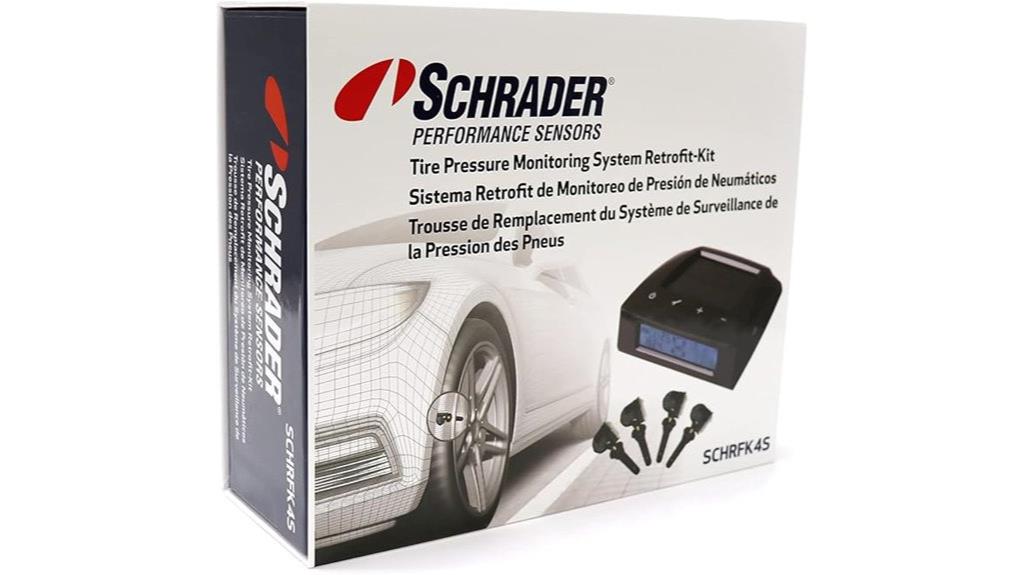
The Schrader TPMS Retrofit Kit is an excellent choice for car owners who want to add OE-quality tire pressure monitoring to their vehicles without factory-installed systems. I love how easy it is to install on passenger cars and light trucks, providing quick, seamless integration. The wireless, solar-powered display offers real-time pressure and temperature updates, including specific location data. It continuously monitors tire conditions and alerts me instantly with both audio and visual warnings if anything’s off. This kit keeps me informed and safe, making tire management effortless without needing complex setups or frequent charging.
Best For: vehicle owners seeking an easy, OE-quality TPMS retrofit solution for passenger cars and light trucks without factory-installed systems.
Pros:
- Simple and quick installation on a variety of vehicles
- Wireless, solar-powered display with real-time pressure and temperature updates
- Continuous monitoring with instant audio and visual alerts for issues
Cons:
- May require some basic technical knowledge for installation
- Dependence on solar power might affect performance in low-light conditions
- Compatibility limited to vehicles without factory-installed TPMS systems
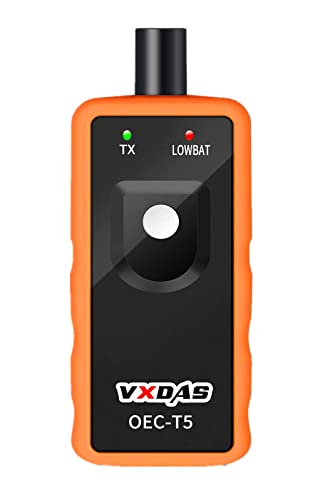
VXDAS TPMS Relearn Tool Only for GM Vehicles (2006-2024 Chevy/Buick/GMC/Opel/Cadillac) Original Sensor with 315/433 MHz, Tire Sensors Pressure Monitor System Reset Tool OEC-T5-2025 Edition
🚗2023 UPDATED FOR WIDER COMPATIBILITY: Specifically designed to work with most GM vehicles 2006-2023 (Chevy / Buick /...
As an affiliate, we earn on qualifying purchases.
VXDAS TPMS Relearn Tool for GM Vehicles
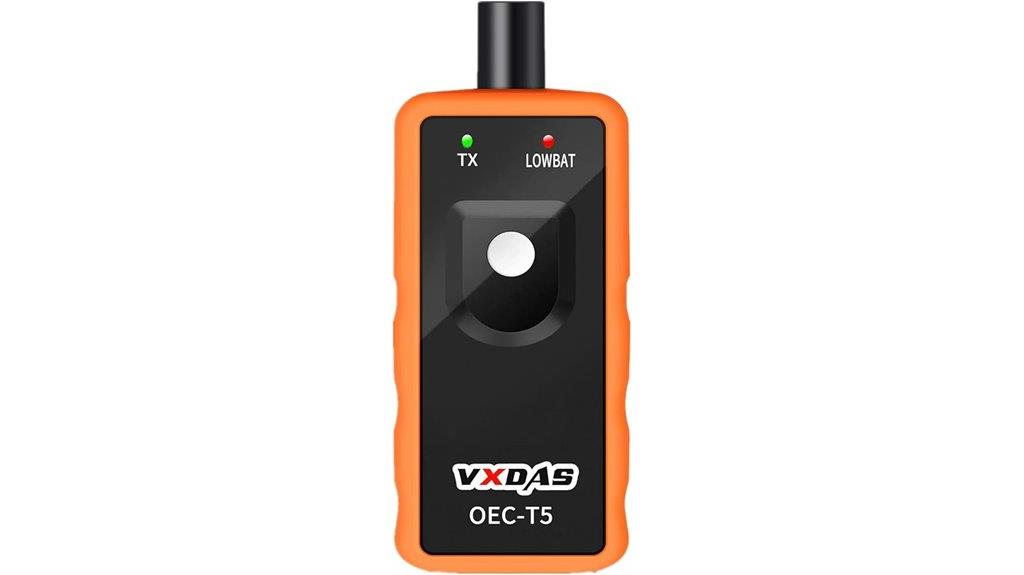
If you own a GM vehicle from 2006 to 2023 and need a quick, reliable way to reset your TPMS sensors, the VXDAS TPMS Relearn Tool is an excellent choice. It’s compatible with a wide range of GM models, including Chevy, Buick, GMC, Opel, and Cadillac, supporting 315/433 MHz sensors. The tool allows you to activate sensors within 1-2 minutes, saving you trips to the dealership or tire shop. Its user-friendly operation involves simply holding it against the tire sidewall near the valve stem and pressing the button. Built with high-quality materials, it offers quick, accurate, and durable performance, ensuring your TPMS functions correctly for safer driving.
Best For: GM vehicle owners from 2006 to 2023 seeking an easy, efficient way to reset their TPMS sensors without visiting a dealership or tire shop.
Pros:
- Compatible with a wide range of GM models including Chevy, Buick, GMC, Opel, and Cadillac
- Supports 315/433 MHz sensors for versatile application
- Quick and simple operation, activating sensors within 1-2 minutes
Cons:
- Not suitable for heavy trucks with more than four tires or external TPMS systems
- Requires the vehicle to be in TPMS Learn Mode, which may be complex for some users
- Limited to GM vehicles; not compatible with non-GM brands

Ken-Tool 29975 Tpms Stem Repair Kit, One Size, Factory
Package Dimensions: 2.5 cms (L) x 16.5 cms (W) x 2.5 cms (H)
As an affiliate, we earn on qualifying purchases.
Ken-Tool 29975 Tpms Stem Repair Kit, One Size, Factory
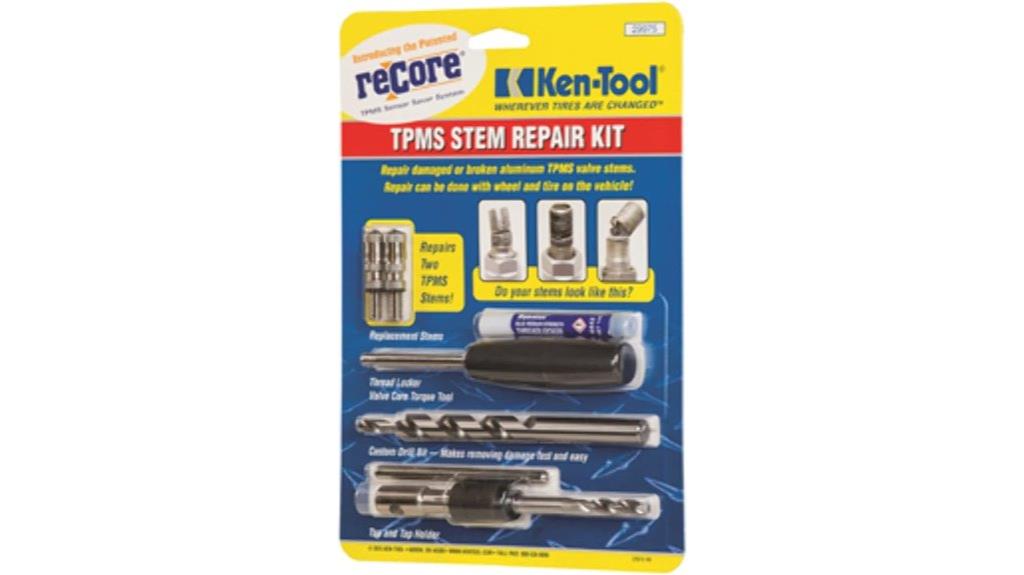
For those looking to quickly and easily repair damaged or corroded TPMS valve stems without removing the tire, the Ken-Tool 29975 TPMS Stem Repair Kit stands out as a reliable choice. This kit includes everything needed for a straightforward repair, such as two replacement stems, a high-speed drill bit, tap and tap holder, thread locker, and a valve core torque tool. Designed for efficiency, the process takes around 20 minutes. Made in China and rated 4.4 stars from 247 reviews, it’s suitable for various vehicles and offers a convenient, cost-effective solution for maintaining accurate tire pressure monitoring.
Best For: DIY enthusiasts and automotive professionals seeking a quick, cost-effective solution to repair damaged TPMS valve stems without tire removal.
Pros:
- Includes all necessary tools and replacement parts for a complete repair
- Easy and quick process, approximately 20 minutes to complete
- Suitable for various vehicle types and corrosion issues
Cons:
- Made in China, which may concern some users regarding manufacturing standards
- One-size-fits-all design may not accommodate all valve stem types
- Limited to repairs without tire removal, not suitable for severe damage or replacement

Dynamic DY-TPMS-16-A TPMS Service Repair Kit Assortment for Most Domestic and Import Vehicles, 400 piece kit
400 Piece TPMS Maintenance Kit.
As an affiliate, we earn on qualifying purchases.
Dynamic TPMS Service Repair Kit (DY-TPMS-16-A) 400-Piece Kit
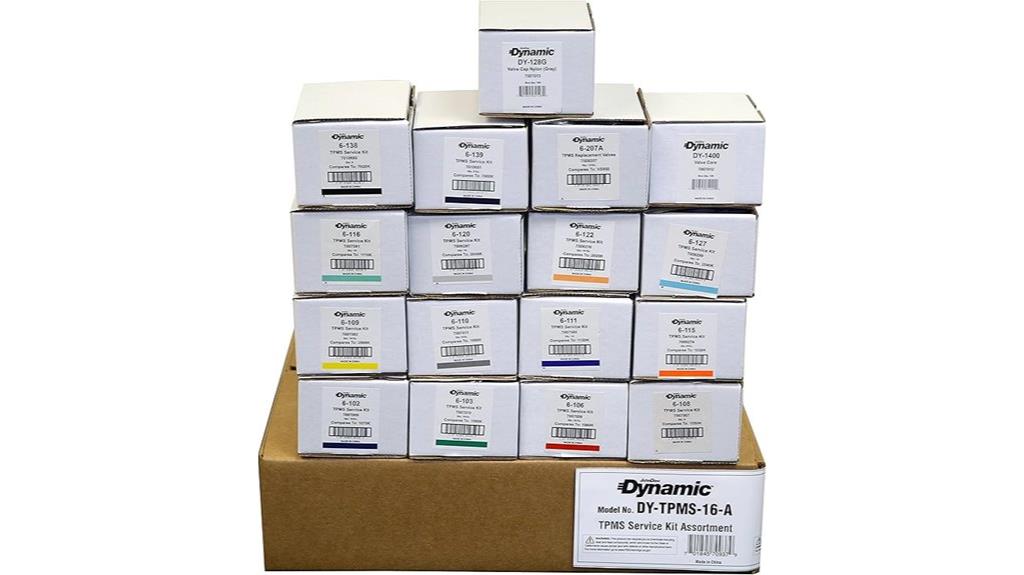
Anyone looking for a thorough, versatile solution will find the Dynamic TPMS Service Repair Kit (DY-TPMS-16-A) 400-Piece Kit particularly valuable, as it covers most domestic and import vehicles. This extensive set includes 100 nickel-plated valve cores, 100 nylon caps, and 17 specialized repair kits designed for brands like GM, Honda, Toyota, BMW, Audi, Nissan, and more. Weighing just 3.67 pounds, it’s easy to handle and store. The kit simplifies TPMS repairs with high-quality, corrosion-resistant components and broad compatibility, making it ideal for both professional technicians and DIY enthusiasts seeking a comprehensive, reliable repair solution.
Best For: professional automotive technicians and DIY enthusiasts seeking a comprehensive, versatile TPMS repair kit compatible with most domestic and import vehicles.
Pros:
- Includes 400 high-quality, corrosion-resistant components for extensive repair needs
- Compatible with a wide range of vehicle makes and models, reducing the need for multiple kits
- Lightweight and compact design for easy handling, storage, and transportation
Cons:
- May be more expensive upfront compared to smaller, less comprehensive kits
- Limited customer reviews (only two) for long-term reliability assessment
- Requires familiarity with TPMS repairs to maximize the kit’s full potential
Tymate TM7 Tire Pressure Monitoring System with 4 Sensors
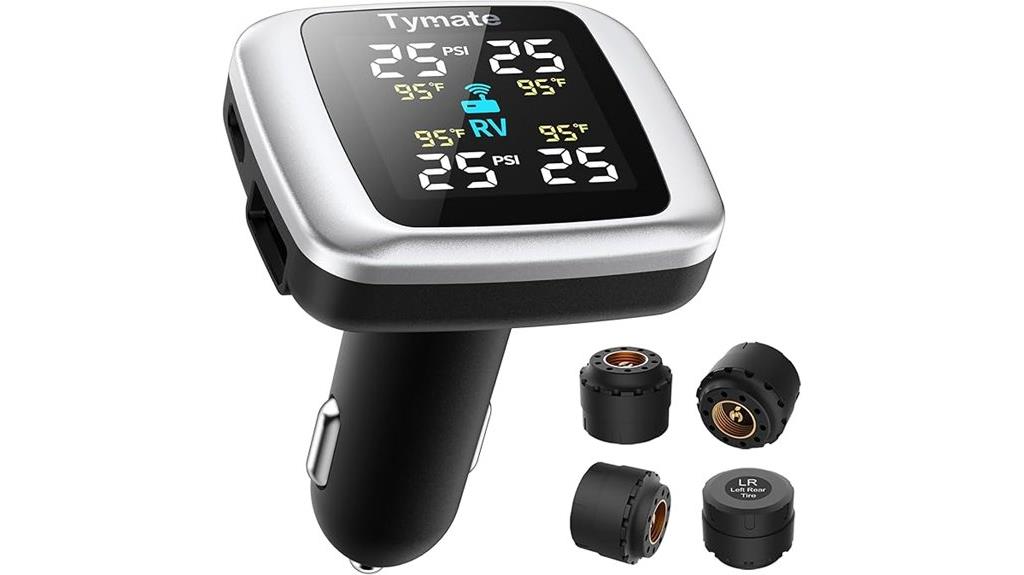
The Tymate TM7 Tire Pressure Monitoring System with 4 Sensors stands out as an excellent choice for drivers seeking an easy-to-install, wireless TPMS that works seamlessly across a variety of vehicles. It features four external sensors compatible with RVs, SUVs, trucks, and sedans, with automatic calibration for accurate readings. The system provides real-time pressure and temperature data, with alarms for high/low pressure, rapid leaks, and high temperatures. Powered via the cigarette lighter, it’s simple to set up and includes a vibrant LCD display for clear visibility. Plus, its reliable signal transmission and support for trailer towing make it a versatile safety upgrade for any vehicle.
Best For: drivers seeking an easy-to-install, wireless TPMS compatible with a wide range of vehicles including RVs, SUVs, trucks, and sedans, especially those towing trailers.
Pros:
- Wireless operation with quick installation via cigarette lighter socket, no wiring needed
- Real-time tire pressure and temperature monitoring with high accuracy and multiple alarm modes
- Includes a vibrant LCD display with adjustable backlight and dual USB charging ports for added convenience
Cons:
- Requires pairing with Tymate RP05 repeater for trailer lengths over 36ft to ensure signal stability
- Sensor battery replacement involves handling small parts and following instructional steps
- Power source limited to vehicle’s cigarette lighter socket, which may not be suitable for all vehicle setups
VXDAS 2IN1 TPMS Relearn Tool for GM and Ford
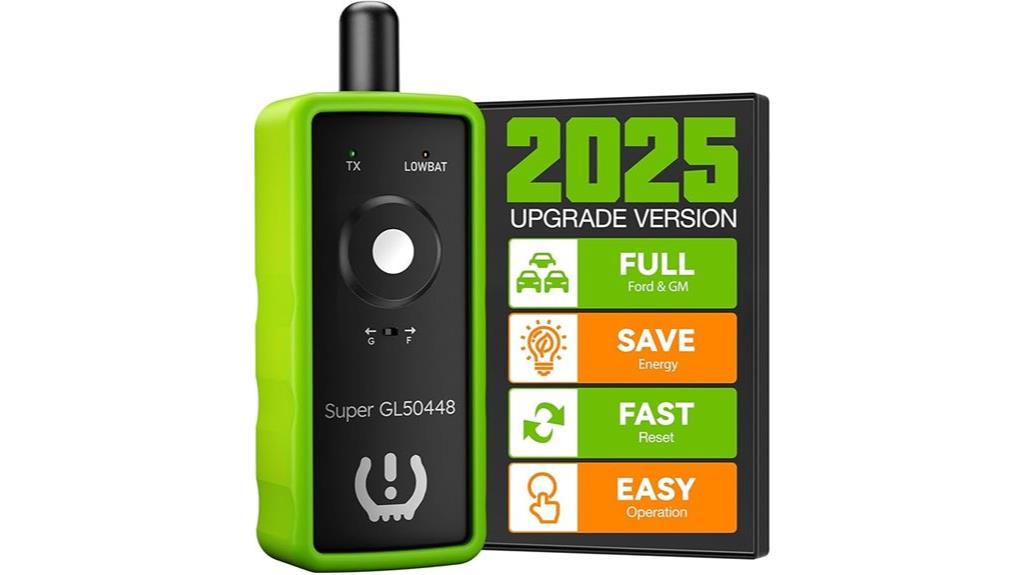
The VXDAS 2IN1 TPMS Relearn Tool for GM and Ford stands out as an ideal option for vehicle owners and professional mechanics seeking a simple, cost-effective solution to reset tire pressure sensors. It supports a wide range of GM and Ford models, including Buick, Cadillac, Chevrolet, Lincoln, and more, with compatibility for 315/433MHz systems. The device features a convenient G and F model switch and can activate sensors within a minute by pressing a button. It helps reset tire pressure lights after rotations or sensor replacements, saving you trips to the dealer and costs. Lightweight and easy to use, it’s a reliable tool for maintaining proper tire pressure monitoring.
Best For: vehicle owners and professional mechanics seeking an affordable, easy-to-use tool to reset tire pressure sensors on GM and Ford vehicles with 315/433MHz systems.
Pros:
- Supports a wide range of GM and Ford models, including Buick, Cadillac, Chevrolet, Lincoln, and more
- Compact, lightweight design with a simple G and F model switch for easy operation
- Activates sensors within one minute, saving time and avoiding costly dealer visits
Cons:
- Requires a 9V battery (not included), adding an extra step to use
- Not compatible with heavy trucks with more than four tires or external TPMS systems
- Limited to vehicles with 315/433MHz TPMS systems, excluding some other types
Wheel Accessories Parts TPMS Service Kits (12 Pack)

Wheel Accessories Parts TPMS Service Kits (12 Pack) are ideal for professional technicians and automotive enthusiasts seeking a reliable, vehicle-specific solution for maintaining TPMS sensors during tire service. This kit includes essential components like grommets, nuts, washers, and core caps, compatible with BMW, Chevrolet, and Honda vehicles. Engineered to meet OE standards, they guarantee durability and reliable performance. Made in the US by PDQ, these high-quality parts are rigorously tested and designed to replace TPMS valve components, much like rubber valve stems. All necessary parts are included for a professional, trouble-free installation, helping keep your tire monitoring system accurate and functional.
Best For: automotive professionals and enthusiasts seeking a reliable, vehicle-specific TPMS service kit for tire maintenance and sensor replacement.
Pros:
- Engineered to meet OE standards for durability and performance
- Includes all necessary components for professional installation
- Manufactured in the US by a reputable company with extensive sensor industry experience
Cons:
- Compatibility limited to select vehicle makes (BMW, Chevrolet, Honda)
- Requires validation for fitment to ensure proper application
- Limited information on long-term durability and performance in diverse conditions
Autel MaxiTPMS TS508WF KIT Sensor Programming Tool
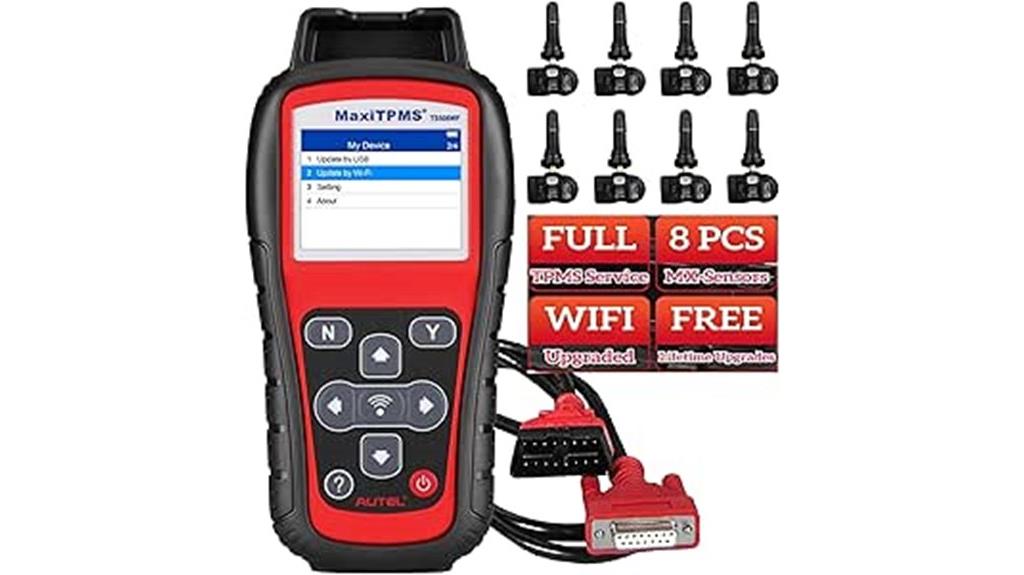
If you’re a professional technician looking for a reliable, all-in-one TPMS programming solution, the Autel MaxiTPMS TS508WF KIT stands out as an excellent choice. This thorough tool offers extensive functions, including sensor ID reading, pressure, temperature checks, fault detection, activation, programming, and relearn procedures. It supports nearly all OE and aftermarket sensors, including 433MHz and 315MHz types, and upgrades from earlier models. The kit includes eight rubber sensors and the TS508WF device, designed specifically for Autel MX sensors. With multiple relearn methods and modes—quick or advanced—it streamlines diagnostics and sensor programming, making tire monitoring quick and efficient for professional use.
Best For: professional automotive technicians and tire service centers seeking a comprehensive, all-in-one TPMS programming and diagnostics solution.
Pros:
- Supports extensive TPMS functions including sensor ID reading, programming, and relearn procedures.
- Compatible with nearly all OE and aftermarket sensors, including 433MHz and 315MHz types.
- Includes a complete kit with eight rubber sensors and user-friendly modes for quick or advanced diagnostics.
Cons:
- Designed specifically for Autel MX sensors; may not support sensors from other brands.
- Requires proper vehicle compatibility verification before use.
- May necessitate technical support for complex issues or training, which could increase time and cost.
JDIAG EL-50448 TPMS Relearn Tool for Auto Tire Pressure System Reset
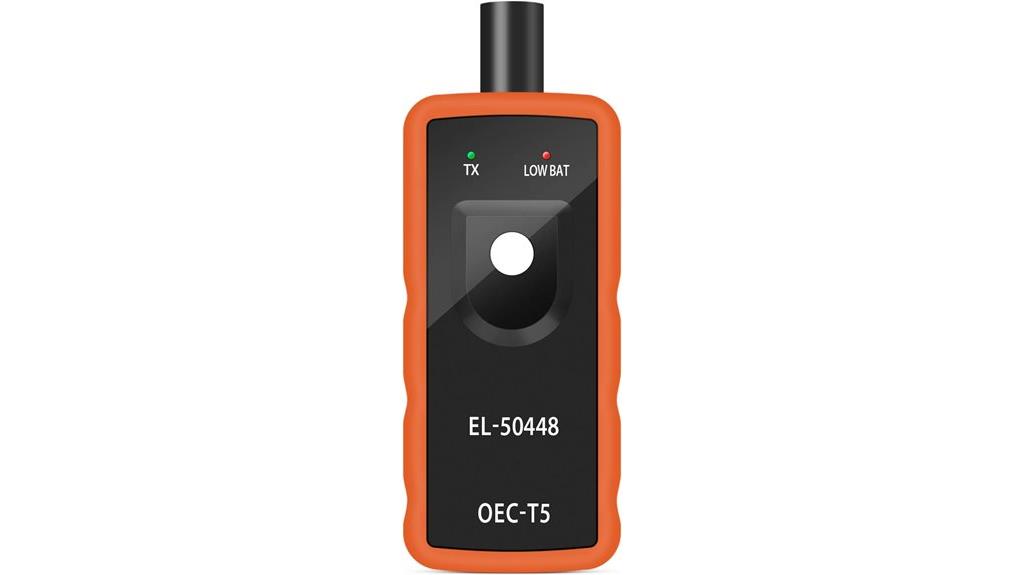
For vehicle owners who want a quick, reliable way to reset their tire pressure monitoring system without visiting the dealership, the JDIAG EL-50448 TPMS Relearn Tool stands out as an excellent choice. This upgraded 2025 edition activates, resets, and replaces sensors on most vehicles from 2006-2022, compatible with 315 or 433 MHz sensors. It’s simple to use—just put your vehicle in TPMS learn mode, hold the device near the valve stem, and press the button. Sensors activate in 1-2 minutes, saving both time and money. Its compact design and sensitivity make it a top-rated, dependable option for maintaining accurate tire monitoring.
Best For: vehicle owners seeking a quick, reliable, and cost-effective method to reset or activate TPMS sensors on most cars from 2006-2022 without visiting a dealership or service center.
Pros:
- Easy to operate with just three simple steps, suitable for DIY use.
- Compatible with a wide range of vehicles and TPMS sensors (315/433 MHz), making it versatile.
- Saves time and money by activating sensors within 1-2 minutes, avoiding costly dealer visits.
Cons:
- Proper use depends on correct antenna positioning and a good 9V battery, which may require attention.
- Reset times may vary depending on vehicle make and model, possibly requiring multiple attempts.
- Limited to vehicles equipped with compatible 315 or 433 MHz sensors; not suitable for all vehicle types.
PDQ Wheel TPMS Sensor Service Kit with Valve Stems

The PDQ Wheel TPMS Sensor Service Kit with Valve Stems is an excellent choice for vehicle owners seeking a reliable, durable solution to maintain or upgrade their tire pressure monitoring systems. This 12-piece kit includes rubber valve stems compatible with Schrader 20008, ideal for vehicles like GM, Ford, Subaru, Chrysler, Dodge, and Jeep from various model years. The kit features self-tapping screws that guarantee proper torque and resistance to vibrational loosening, making installation straightforward. Crafted from ozone-resistant EPDM rubber, the valve stems withstand extreme temperatures from -40°C to +125°C, ensuring long-lasting performance in harsh conditions.
Best For: vehicle owners and service professionals seeking a durable, reliable TPMS sensor service kit for a variety of compatible vehicles.
Pros:
- Includes rubber valve stems made from ozone-resistant EPDM rubber for enhanced durability.
- Features self-tapping screws that ensure proper torque and resistance to loosening from vibrations.
- Suitable for multiple vehicle makes and models, providing versatile application options.
Cons:
- Does not include threaded valve stems, requiring self-tapping screws for installation.
- Compatibility must be confirmed via Amazon Confirmed Fit to ensure proper fitment.
- May require professional installation for optimal performance and to avoid damage.
Tymate TM2 RV Tire Pressure Monitoring System
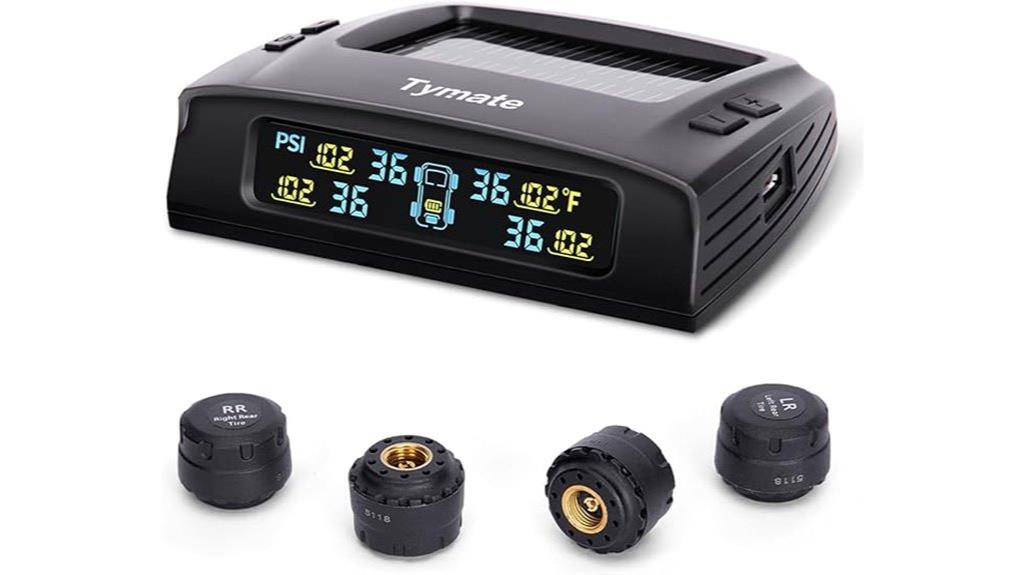
The Tymate TM2 RV Tire Pressure Monitoring System stands out for its ability to monitor up to 10 tires, making it an excellent choice for RV owners and trailers needing extensive pressure tracking. It features a clear color LCD display with automatic backlight, ensuring easy readings day or night. The system detects pressure from 0 to 87 PSI and uses reliable 433.92MHz signals. With four pre-labeled waterproof sensors, users can add up to six more and optional repeaters for longer trailers. Its six alarm modes—covering leaks, pressure, temperature, and signal loss—help maintain safety and performance effortlessly.
Best For: RV owners, trailer operators, and anyone needing to monitor up to 10 tires for safety and maintenance.
Pros:
- Monitors up to 10 tires with optional expandability, ideal for large vehicles and trailers.
- Clear color LCD display with automatic backlight for easy reading day or night.
- Six alarm modes provide comprehensive alerts for leaks, pressure, temperature, and signal issues.
Cons:
- Requires additional accessories like repeaters for trailers over 36ft, which may increase overall cost.
- Sensors have a lifespan of up to two years and require battery replacement after about six months.
- Power source options (solar, USB, cigarette lighter) may need additional adapters or accessories not included.
Marcala TPMS Sensors Set of 4
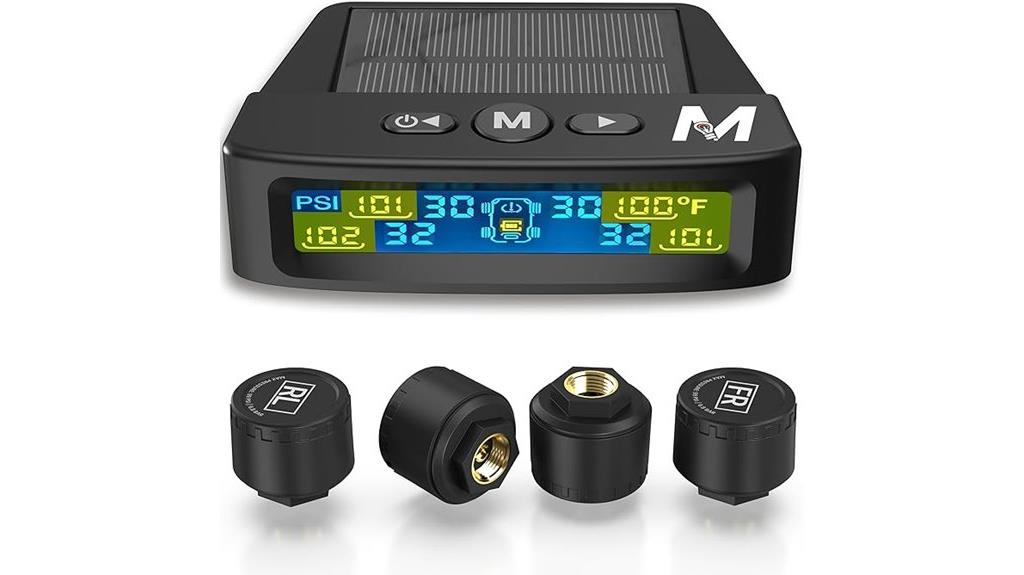
If you’re looking for a reliable way to monitor your tire pressure without the hassle of complex installations, the Marcala TPMS Sensors Set of 4 is an excellent choice. These external sensors fit SUVs, trucks, motorcycles, and more, measuring pressure up to 98 PSI with no setup required—install in less than a minute. They work on 1-4 wheels within a 20-foot range and are waterproof and durable for all weather conditions. The system features a bright LCD display, real-time updates, and six alarms to alert you of pressure or temperature issues, helping you stay safe and avoid costly repairs.
Best For: drivers of SUVs, trucks, motorcycles, and other vehicles seeking quick, reliable, and weatherproof tire pressure monitoring without complex setup.
Pros:
- Easy installation in less than a minute with no setup required
- Waterproof (IP67 rated) and durable for all weather conditions
- Real-time, accurate pressure and temperature updates with multiple alarm alerts
Cons:
- Limited to a 20-foot monitoring range, which may not suit all vehicle configurations
- Sensors operate on batteries that enter sleep mode when parked, potentially delaying updates
- Only compatible with 1-4 wheel monitoring; not suitable for vehicles with more wheels or specialized setups
TPMS Sensor Set for GM Chevy Silverado Buick Cadillac GMC (4 Pack)

Designed for GM vehicle owners seeking a reliable, affordable upgrade, the TPMS Sensor Set for GM Chevy Silverado Buick Cadillac GMC (4 Pack) offers wide compatibility with models manufactured after 2006. These Gen 2 sensors are compatible with trucks, SUVs, and cars like Silverado, Cadillac, Buick, and Pontiac. They feature a sturdy design, stronger signals, and easy screw-on installation, making DIY setup simple. The included EL-50448 relearn tool lets you reset the system in about five minutes. With a low power draw and replaceable batteries, these sensors provide accurate tire pressure monitoring, helping you turn off warning lights and improve safety without breaking the bank.
Best For: GM vehicle owners seeking a cost-effective, reliable upgrade for tire pressure monitoring across trucks, SUVs, and cars manufactured after 2006.
Pros:
- Wide compatibility with multiple GM models including Silverado, Cadillac, Buick, and Pontiac.
- Easy DIY installation with screw-on sensors and included relearn tool for quick system reset.
- Long-lasting, replaceable batteries with low power consumption and high accuracy.
Cons:
- Only compatible with GM vehicles manufactured after 2006.
- Installation requires some basic technical skills for sensor screwing and system relearning.
- Batteries may need replacement after approximately 2 years of use.
XTOOL TP150 TPMS Programming Tool

For professionals and serious DIY enthusiasts seeking a reliable TPMS programming solution, the XTOOL TP150 TPMS Programming Tool stands out with support for a wide range of sensors and vehicles. It can activate and relearn all known sensors, including OEM and universal types, and supports static and OBD modes for seamless programming. Compatible with XTOOL TS100 sensors and over 99% of vehicle makes—covering US, Asian, and European brands—it also diagnoses TPMS issues, checks tire pressure, and resets warning lights. Its user-friendly design, lifetime updates, and broad compatibility make it a versatile tool for maintaining accurate tire monitoring on older vehicles.
Best For: Professional technicians and serious DIY enthusiasts seeking a comprehensive TPMS programming and diagnostic tool compatible with a wide range of vehicles and sensors.
Pros:
- Supports activation, relearn, and diagnosis of all known OEM and universal TPMS sensors with real-time monitoring.
- Compatible with over 99% of vehicle makes across US, Asian, and European brands, including XTOOL TS100 sensors.
- User-friendly design with lifetime updates, making it suitable for both professionals and DIY users.
Cons:
- No touch screen interface; navigation relies on menu options, which may be less intuitive for some users.
- Requires VIN verification for certain vehicle compatibilities, adding an extra step before use.
- Slightly heavier and larger than compact handheld tools, which might affect portability for some users.
Factors to Consider When Choosing TPMS Retrofit Kits for Older Vehicles

Choosing the right TPMS retrofit kit for an older vehicle means considering several key factors. I look at vehicle compatibility, sensor types, and installation ease to guarantee the system fits seamlessly. Additionally, features like real-time monitoring and alert notifications can make a big difference in safety and convenience.
Vehicle Compatibility Requirements
When selecting a TPMS retrofit kit for an older vehicle, it’s crucial to guarantee compatibility with your car’s specific make, model, and year, especially since many older models lack factory-installed sensors. Verify that the sensor frequency, such as 315MHz or 433MHz, matches your vehicle’s existing system to ensure proper communication. Check whether the kit supports your vehicle’s system type, whether OE or aftermarket sensors, to avoid compatibility issues. It’s also important to confirm that the kit includes features like easy installation or relearn procedures suited for your vehicle. Finally, review your tire valve type and size to ensure the sensors and repair components fit your wheels correctly. Taking these factors into account helps ensure a smooth installation and reliable tire monitoring.
Sensor Type and Frequency
Selecting the right TPMS retrofit kit means paying close attention to the sensor type and frequency. Different sensors operate on specific radio frequencies, mainly 315 MHz or 433 MHz, which must match your vehicle’s system for proper operation. Compatibility is key; an incorrect frequency can cause system errors or inaccurate readings. Additionally, sensor types vary—some are external, battery-powered units, while others are internal sensors integrated into the valve stem. The type affects ease of installation and compatibility with older vehicles. It’s also essential to make certain the sensor’s communication protocol aligns with your vehicle’s ECU. Proper matching of sensor type, frequency, and protocol ensures reliable tire monitoring and smooth reprogramming, avoiding future technical issues.
Easy Installation Process
Installing a TPMS retrofit kit on older vehicles can be straightforward if you focus on kits designed for easy setup. The best options usually require minimal tools and simple steps, making DIY installation feasible. Look for kits with quick-connect adapters or snap-in components—these speed up the process without complex wiring or calibration. Clear, step-by-step instructions and visual guides are incredibly helpful, especially for those doing it themselves. Wireless or solar-powered displays eliminate the need for wiring, saving time and reducing hassle. Compatibility with existing sensors and vehicle systems is also essential, as it ensures a seamless fit without additional modifications. Choosing a kit with these features will make the installation process quick, easy, and stress-free.
Real-Time Monitoring Features
Real-time monitoring features are essential for ensuring your tires stay safe and properly inflated. They provide continuous updates on tire pressure and temperature, so you can detect issues immediately. This instant data helps prevent accidents caused by underinflated or overheated tires, improving overall safety. Wireless sensors transmit pressure and temperature information directly to your display, removing the need for manual checks. Many systems also include visual and audio alerts that notify you promptly of pressure drops or temperature anomalies, so you can act quickly. Additionally, some kits offer location-specific readings, making diagnostics more precise and maintenance easier. Overall, real-time monitoring keeps you informed at all times, ensuring your tires are always in *ideal* condition and reducing the risk of tire-related problems on the road.
Alert and Notification Systems
When choosing TPMS retrofit kits for older vehicles, it’s important to pay close attention to the alert and notification systems they offer. A good system should provide both visual and audio warnings for pressure or temperature issues, helping you respond quickly. Real-time notifications are essential for addressing problems before they lead to tire failure or damage. Look for kits that allow customizable thresholds for pressure and temperature alerts, so you can tailor warnings to your driving conditions. Wireless and solar-powered display units improve visibility and guarantee continuous monitoring without complex wiring. Reliable alerts are especially vital in older vehicles, which often lack factory warning systems. Overall, effective alert and notification systems boost safety and give you peace of mind on the road.
Power Source Options
Choosing the right power source for your TPMS retrofit kit is essential, especially for older vehicles where ease of installation and reliability matter most. Solar-powered kits are a great option because they harness ambient light to charge internal batteries, eliminating wiring and battery replacements. Wireless power options make installation straightforward by reducing the need to connect sensors to the vehicle’s electrical system. Some kits feature rechargeable batteries that can be charged via USB or external sources, offering long-term usability. Power source choices directly influence maintenance frequency—solar and rechargeable systems typically require less attention than traditional battery-powered sensors. Additionally, the durability and reliability of the system depend on the power source, especially in vehicles exposed to extreme temperatures or harsh conditions.
Budget and Cost Effectiveness
Selecting a TPMS retrofit kit that balances cost and features is essential for staying within your budget while guaranteeing reliable tire pressure monitoring. I recommend considering the total cost, including installation and any tools needed, to avoid surprises. Look for kits that offer long-term savings by providing dependable performance without frequent repairs or replacements. Comparing prices of similar kits helps identify the best value, especially those that include all essential components like sensors, relearn tools, and vehicle compatibility. It’s also important to ensure the kit delivers accurate and consistent readings, as cheap options that compromise accuracy can lead to tire damage or safety risks. By weighing these factors, you can choose a cost-effective kit that offers quality and peace of mind without breaking the bank.
Frequently Asked Questions
Are TPMS Retrofit Kits Compatible With All Vehicle Makes and Models?
Most TPMS retrofit kits are compatible with a wide range of vehicle makes and models, but not all. I always recommend checking the kit specifications and your vehicle’s compatibility before purchasing. Some kits are designed for specific years or types of vehicles, so it’s essential to confirm this. If you’re unsure, consulting with the manufacturer or a professional mechanic can save you time and ensure proper fitment.
How Do I Program or Reset a TPMS Sensor After Installation?
After installing a TPMS sensor, I usually program or reset it by turning on my vehicle, then following the specific reset procedure outlined in my vehicle’s manual or the sensor’s instructions. Often, I need to press a reset button or drive for a certain distance to let the system auto-calibrate. If needed, I use a TPMS scan tool to reprogram the sensors directly, ensuring accurate tire pressure readings.
Can Older Vehicles’ Wheels Be Used With Modern TPMS Sensors?
Yes, older vehicle wheels can often be used with modern TPMS sensors, but you’ll need to check compatibility first. I recommend inspecting the wheel’s valve stem hole size and ensuring it fits the sensor. Sometimes, adapter kits or specific sensors designed for aftermarket installation are necessary. I always suggest consulting your vehicle’s manual or a professional to confirm compatibility before installation to avoid issues.
What Maintenance Is Required for TPMS Retrofit Kits Over Time?
Maintenance for TPMS retrofit kits is pretty straightforward but essential. I regularly check the sensor batteries, as they can die over time, usually after 5-10 years. I also keep the sensors clean and guarantee they’re properly mounted to prevent false readings. While they require minimal effort, neglecting these steps can lead to inaccurate tire pressure readings, which defeats their purpose. Staying attentive keeps my tires safe and my monitoring system reliable.
Do Retrofit Kits Affect Tire Warranty or Insurance Coverage?
Retrofit kits generally don’t affect your tire warranty or insurance coverage if installed properly. I always recommend double-checking with your vehicle’s manufacturer or insurance provider beforehand, though. Sometimes, improper installation or using non-approved parts might cause issues. I make sure to choose reputable kits and follow installation instructions carefully to avoid any potential problems. That way, I stay covered and ensure my tire monitoring system works reliably.
Conclusion
So, after all this, who knew that upgrading an old ride’s tire pressure monitoring could be so exciting? It’s almost like giving your car a tech-savvy facelift—without the plastic surgery bills. Whether you go simple or fancy, just remember: a better TPMS means fewer surprises on the road, and maybe, just maybe, a little more peace of mind. Because nothing screams “adventure” like a correctly monitored tire, right?