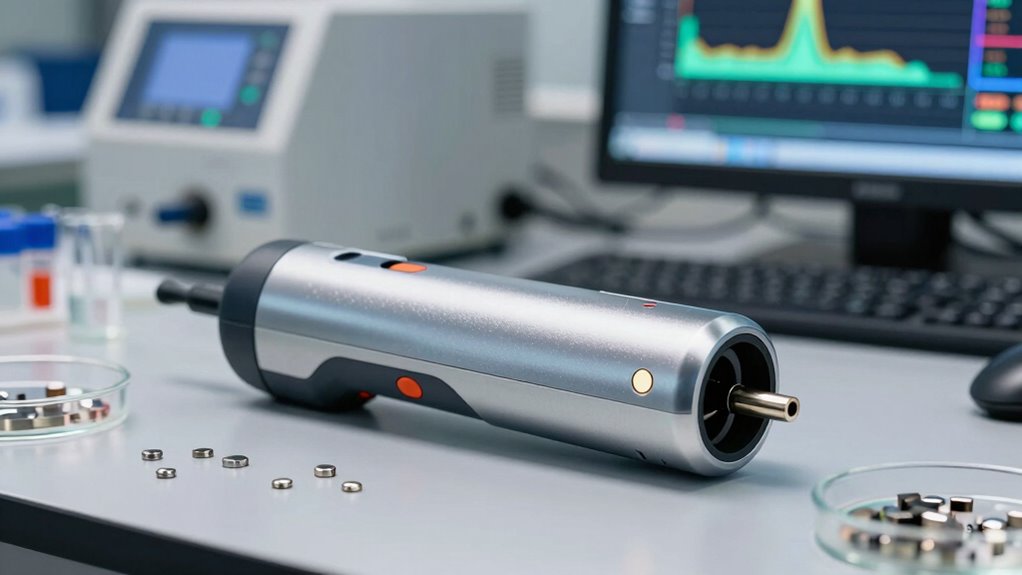

Portable XRF analyzers let you quickly screen elements on-site, giving you immediate data for fast decision-making. They save time and money by providing rapid analysis without needing laboratory tests. These devices are ideal for evaluating metal alloys, soils, and geological samples. Proper calibration and sample preparation guarantee accuracy, even in complex samples. To master these techniques and maximize your results, keep exploring how to use and maintain your XRF device effectively.
Key Takeaways
- Portable XRF analyzers enable rapid, on-site elemental screening for immediate decision-making.
- Proper calibration ensures accurate and reliable results during quick field analyses.
- Efficient sample preparation minimizes interferences, improving measurement precision.
- Advanced spectral analysis helps identify elements quickly, even in complex samples.
- Regular instrument maintenance and calibration checks sustain optimal screening performance.
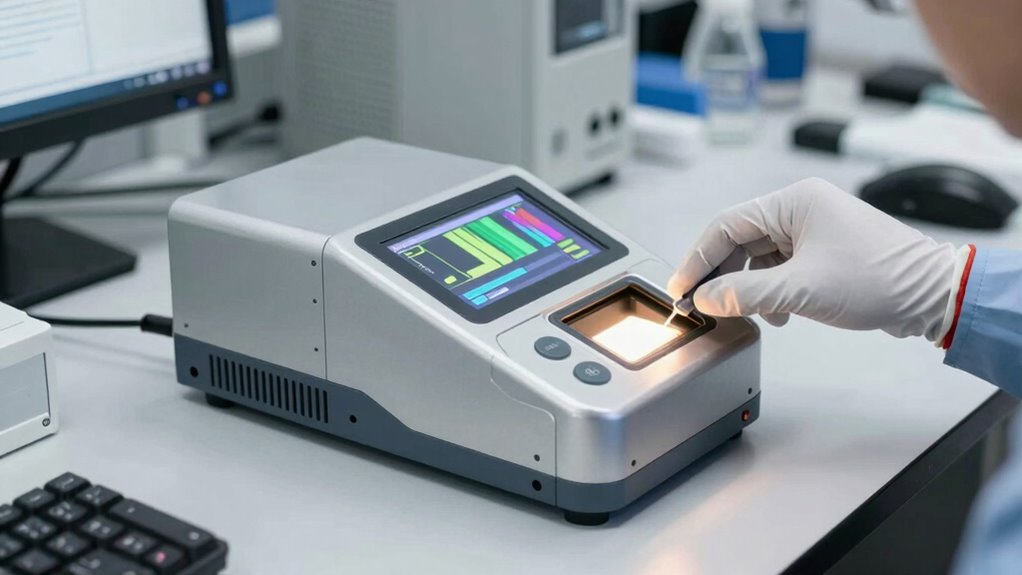
Portable XRF analyzers have revolutionized how industries perform rapid element screening, offering quick, on-site analysis without the need for laboratory testing. This technology allows you to immediately identify the elemental composition of materials, saving time and reducing costs. Whether you’re evaluating metal alloys, soil samples, or geological materials, these devices provide real-time data that helps you make informed decisions quickly. To guarantee accurate results, understanding calibration techniques is vital. Proper calibration aligns the analyzer’s readings with known standards, which can involve using calibration curves or certified reference materials. Regular calibration checks are essential, especially when working with different sample types or in varying environmental conditions, to maintain measurement precision. Many analyzers feature built-in calibration routines, but you should also perform periodic manual calibrations to verify accuracy, especially if readings seem inconsistent. Additionally, understanding calibration techniques enhances the reliability of your measurements and ensures consistent performance over time.
Once you’ve collected data from the analyzer, data interpretation becomes your next key step. The raw spectral data needs to be translated into meaningful information about the sample’s elemental composition. Modern analyzers often come with integrated software that simplifies this process, providing clear readouts and analysis reports. However, it’s important to understand how to interpret the spectral peaks and the significance of each element’s signal intensity. Recognizing potential interferences or overlaps in spectral lines helps prevent misidentification of elements. You should also be aware of detection limits and how sample matrix effects might influence results. For instance, heavy metal detection in soils could be affected by mineral content or moisture levels, which can skew readings if not properly accounted for. Moreover, understanding spectral analysis techniques can help you better identify anomalies or unexpected results during testing. Developing a good understanding of spectral resolution can further improve your ability to distinguish close-lying spectral peaks and refine your analysis. Regularly reviewing spectral interference issues can also improve the accuracy of your results by helping you identify and mitigate common spectral overlaps. Being familiar with sample preparation methods can further enhance the precision and consistency of your measurements.

Handheld XRF Metal Analyzer Gun – Portable XRF Analyzer for Precious Metals | Gold Tester, Alloy & Element Detector with High-Resolution Sensor Data Transmission
- Multi-Scenario Metal Testing: Identifies elements in jewelry and alloys
- Precise Element Detection: Accurately detects Au, Ag, Cu, and more
- Fast & Easy Operation: Results in 1-2 seconds with one click
As an affiliate, we earn on qualifying purchases.
As an affiliate, we earn on qualifying purchases.
Frequently Asked Questions
What Is the Typical Lifespan of a Portable XRF Analyzer?
A portable XRF analyzer typically lasts around 3 to 5 years, depending on how often you use it and how well you maintain it. Regular calibration procedures keep it accurate, while proper battery care extends its operational life. You should replace batteries when they lose capacity, and schedule calibration checks to guarantee precise readings. With proper upkeep, your analyzer can serve you reliably for several years.
How Do Environmental Conditions Affect Analyzer Accuracy?
Environmental conditions directly impact your analyzer’s accuracy. Fluctuating temperatures can affect temperature stability, causing measurement errors. To maintain precision, you should perform environmental calibration regularly, especially if you move between different environments. High humidity or dust can also interfere with readings, so keep the device in a controlled environment when possible. Proper calibration and monitoring environmental factors guarantee your analyzer provides reliable, accurate results over time.
Are There Specific Training Requirements for Operators?
You must undergo specific training before operating a Portable XRF Analyzer. Operator certification is essential to guarantee you understand safety protocols and proper handling techniques. Without proper training, you risk inaccurate results or safety hazards. The process might seem strict, but it’s designed to protect you and guarantee precise measurements. Don’t underestimate the importance—certification and safety protocols are your best tools for safe, effective analysis every time.
What Are the Maintenance Needs for Portable XRF Devices?
You need to regularly perform calibration procedures to guarantee your portable XRF device provides accurate readings. Keep the device clean and check for any damage. Battery management is essential—recharge batteries promptly and avoid letting them fully deplete to extend their lifespan. Also, store the analyzer in a protective case when not in use. Routine maintenance like this helps maintain device performance and prolongs its service life.
Can Portable XRF Analyzers Detect All Element Types?
Did you know portable XRF analyzers can detect over 15 different element groups? They excel at element detection but aren’t capable of identifying every element, especially lighter ones like hydrogen, helium, or lithium. Calibration accuracy is essential for reliable results, so regular calibration guarantees you get precise readings. While versatile, these analyzers work best within their detection limits, making them ideal for many applications but not universal for all element types.
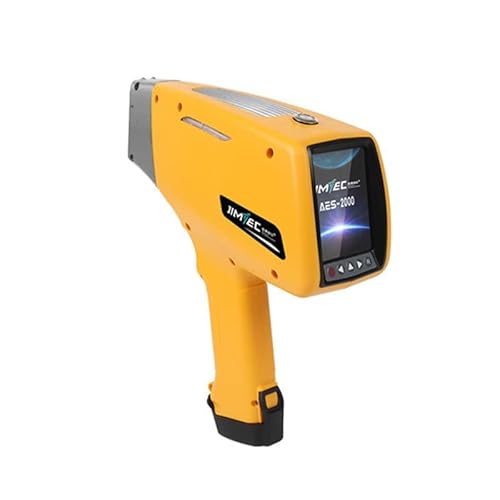
Portable XRF Metal Analyzer – Handheld 50kV Spectrometer – Fast Elemental Identification – Si-PIN Diode Detector – 6 Filters Peltier Cooling – Alloy Steel Precious Metals Mining Recycling
- Portable Metal Analyzer: Compact handheld design for on-the-go analysis
- High-Precision Technology: 50kV X-ray tube with automatic filter exchange
- Stable Performance: Peltier cooling maintains probe at -35°C
As an affiliate, we earn on qualifying purchases.
As an affiliate, we earn on qualifying purchases.
Conclusion
In conclusion, portable XRF analyzers provide powerful, precise, and prompt element screening, simplifying your sampling strategy. With quick, reliable results, you can confidently classify, compare, and conquer contaminants and compositions in the field. Their lightweight, rugged design ensures durability and ease of use wherever you go. Embrace the efficiency of fast, flexible, and focused analysis, and elevate your environmental, industrial, or research endeavors with these game-changing tools.

8-in-1 Soil Tester, Soil Moisture Meter with Digital PH, NPK, EC, Salt, Temp, Rechargeable Portable Soil Test Kit for Gardening, Farming and Outdoor Plants
- Complete Soil Analysis: Measures pH, moisture, temperature, EC, NPK, salinity
- High Precision & Fast Results: Over 99% accuracy, results in under 5 seconds
- Data Storage & Export: Stores and exports test data via USB
As an affiliate, we earn on qualifying purchases.
As an affiliate, we earn on qualifying purchases.

Lab Equipment Visible Spectrophotometer 325-1050nm Single Beam Bandwidth 4.0nm Spectral Photometer with Software
- Spectral Bandwidth: 4 nm for accurate measurements
- Wavelength Range: 325-1050 nm for UV and visible light
- Resolution and Repeatability: 0.5 nm resolution for consistent results
As an affiliate, we earn on qualifying purchases.
As an affiliate, we earn on qualifying purchases.