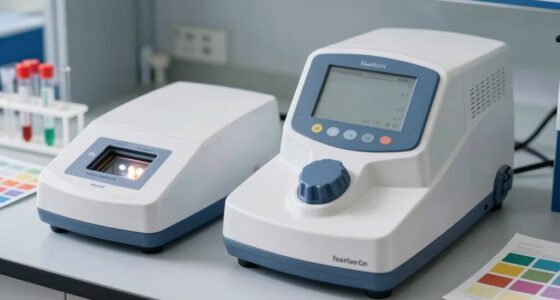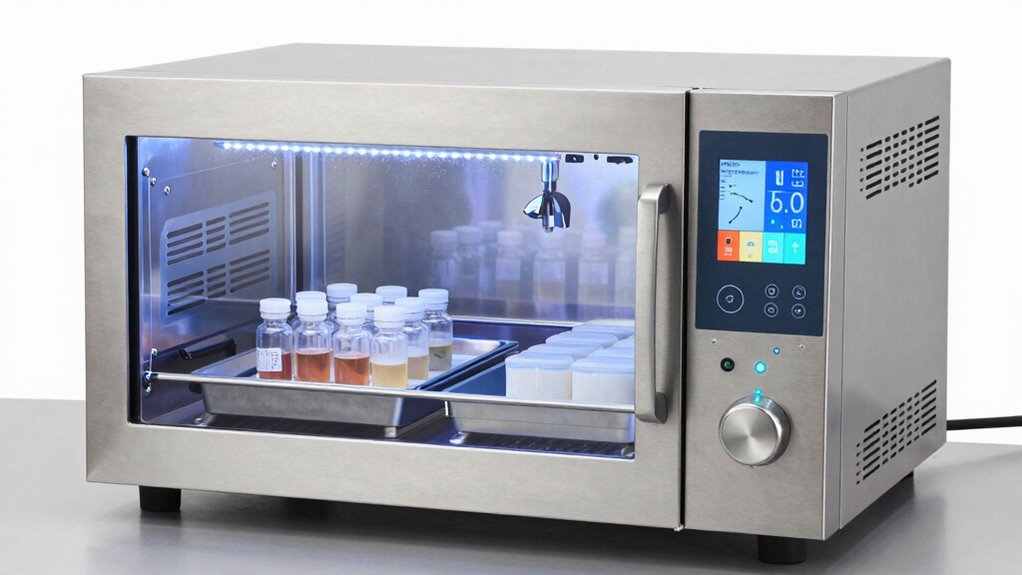

A benchtop lyophilizer helps you efficiently remove moisture from your samples by freezing them first and then applying a controlled vacuum to sublimate the ice directly into vapor. This process preserves the sample’s structure, stability, and biological activity without damage. It allows you to customize drying parameters and monitor the process in real-time. If you want to find out how it fits into your lab workflow, keep exploring to discover more.

Prime made for students and young adults
- Fast, free delivery for dorm and study essentials
- Prime Video and Amazon Music included
- Member-only deals
Key Takeaways
- Removes moisture from samples through vacuum drying and sublimation, preserving their structure and stability.
- Uses low-temperature, controlled environments to gently dry delicate biological or chemical samples.
- Ensures reproducibility and consistency with automated process controls and real-time monitoring.
- Facilitates sample preservation, storage, and preparation for analysis or further experimentation.
- Compact design integrates seamlessly into laboratory workflows, improving efficiency and sample reliability.
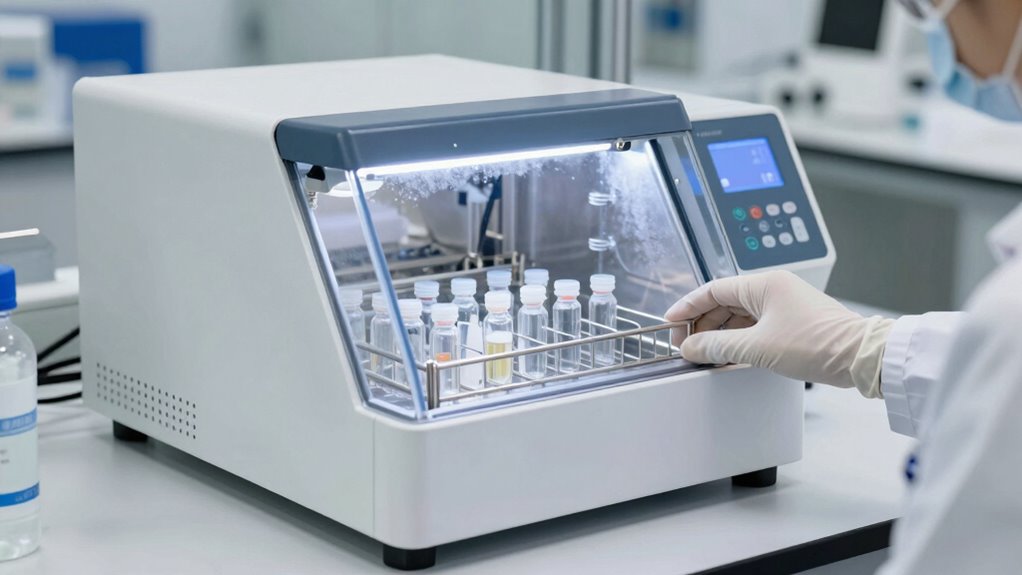
A benchtop lyophilizer is an indispensable tool in sample preparation, especially when working with sensitive biological and chemical materials. Its primary function is to facilitate vacuum drying, a process that efficiently removes moisture from samples without damaging their structure or integrity. Unlike traditional drying methods, vacuum drying in a lyophilizer occurs under reduced pressure, allowing water or other solvents to evaporate at low temperatures. This gentle approach is essential for preserving delicate proteins, enzymes, or pharmaceuticals that could denature or degrade under heat. When you use a benchtop lyophilizer, you guarantee your samples are dried thoroughly while maintaining their biological activity and chemical stability.
A benchtop lyophilizer gently removes moisture, preserving sample integrity and stability through low-temperature vacuum drying.
Moisture removal is a pivotal step in sample prep because residual water can compromise the stability, shelf life, and efficacy of your materials. The lyophilizer’s ability to remove moisture efficiently under vacuum conditions means you get high-quality, dry samples with minimal risk of contamination or damage. As you operate the device, you’ll notice that the process involves freezing the sample first, then reducing pressure to allow the frozen water to sublimate directly from solid to vapor. This sublimation process is key to preserving the sample’s original structure, which is especially important for sensitive biological specimens or pharmaceuticals that require precise handling. Additionally, precise temperature control enhances the preservation of sample integrity during drying, ensuring optimal results. Incorporating automated process controls can further improve consistency and reduce user intervention. Furthermore, modern lyophilizers often include real-time monitoring features that help optimize each drying cycle for better efficiency.
Using a benchtop lyophilizer also provides you with control over the drying parameters, such as temperature, pressure, and duration. These settings enable you to tailor the process to specific sample requirements, guaranteeing maximum moisture removal without over-drying or compromising sample quality. Additionally, because the device is compact and designed for laboratory bench use, it integrates seamlessly into your workflow, saving you space and time. The user-friendly interface typically allows you to monitor and adjust conditions easily, giving you confidence in achieving consistent results.
In your sample preparation process, a benchtop lyophilizer enhances reproducibility and reliability. By removing moisture efficiently while preserving delicate components, it plays a critical role in preparing samples for storage, analysis, or further experimentation. Whether you’re working with pharmaceuticals, biological specimens, or chemical compounds, this tool helps you maintain sample integrity from start to finish. In essence, it’s an essential piece of equipment that combines the benefits of vacuum drying and moisture removal, ensuring your samples are stable, dry, and ready for the next step in your research or production process.
In addition, the precise control offered by modern benchtop lyophilizers allows for customization of drying cycles, accommodating a wide range of sample types and sizes.
Popular right now

Shark Pet Cordless Stick Vacuum, Up to 40-Minute Runtime, Lightweight, Ocean Blue, IX141

Dyson V8 Cordless Vacuum

Bose QuietComfort Headphones (2nd Gen) Wireless Noise-Cancelling Headphones, Black
As an affiliate, we earn on qualifying purchases.
Frequently Asked Questions
How Does a Benchtop Lyophilizer Differ From Larger Models?
A benchtop lyophilizer is more compact and suited for small-scale sample prep, unlike larger models that handle bigger volumes. It offers precise control over storage conditions, but requires regular equipment calibration to guarantee peak performance. You’ll find it easier to operate and maintain, making it ideal for labs with limited space. However, larger models are better for high-throughput needs, providing greater capacity and automation options.
What Types of Samples Are Best Suited for Lyophilization?
You’re best suited to lyophilize biological samples like tissues, cells, and proteins, which need careful preservation. Lyophilization benefits include extending shelf life and maintaining sample integrity. It’s also excellent for pharmaceuticals, food, and research materials that require stable, dry storage. By freeze drying these samples, you guarantee their longevity, ease of transport, and readiness for future analysis, making lyophilization an essential step in sample preservation.
How Long Does the Lyophilization Process Typically Take?
Think of it like a delicate dance, where timing matters. Typically, the lyophilization process takes anywhere from 24 to 48 hours. You control vacuum pressure carefully to remove moisture without compromising sample stability. Factors like sample size and composition influence the duration. During this period, your samples gradually reach the perfect dryness, ensuring they stay stable and ready for long-term storage or analysis.
What Maintenance Is Required for a Benchtop Lyophilizer?
You need to regularly follow cleaning protocols to keep your benchtop lyophilizer in prime shape, ensuring no residue or contamination build-up. Check seals and filters periodically and replace them as needed. Store the device in a clean, dry environment to prevent damage. Proper maintenance also involves calibrating temperature and vacuum systems, which helps maintain peak performance and prolongs the lifespan of your lyophilizer.
Are There Safety Concerns When Operating a Lyophilizer?
You definitely need to be cautious when operating a lyophilizer—mistakes could turn your lab into a chemical hazard zone! While it’s safe when used properly, watch out for chemical hazards from residual solvents, and keep fire safety measures in check because the device involves low temperatures and vacuum conditions that could cause accidents. Always wear protective gear and follow safety protocols to prevent any mishaps, no matter how small!
Conclusion
A benchtop lyophilizer simplifies your sample prep process, saving you time and preserving sample integrity. With its compact size and efficient drying capabilities, it’s a game-changer for labs. Did you know that over 70% of pharmaceutical companies now rely on lyophilization to guarantee drug stability? Embracing this technology means you’re staying ahead in quality and innovation, giving you confidence in your results and peace of mind in your research or production.