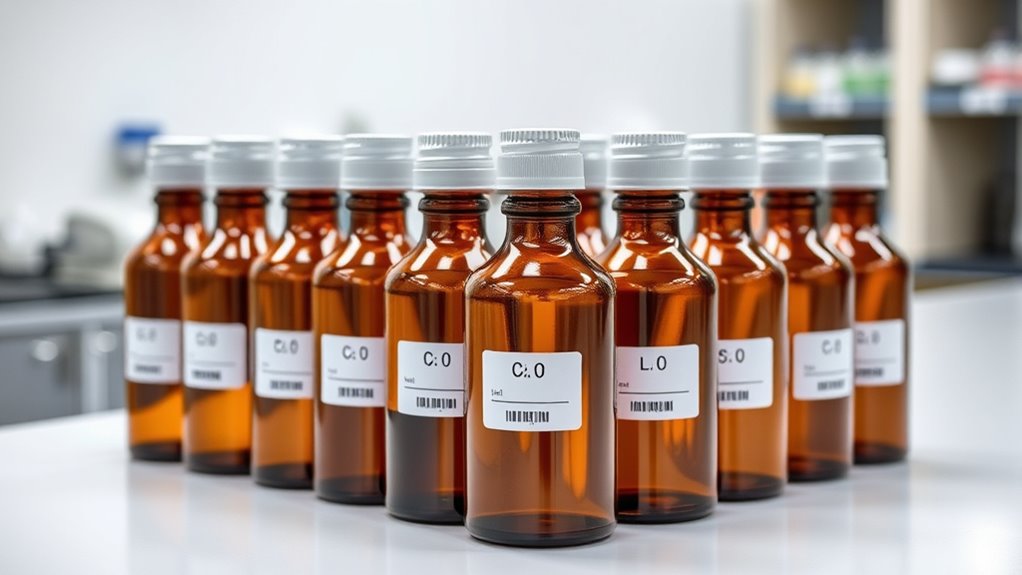
When storing acids safely, choosing the right storage bottles is essential to prevent leaks, chemical reactions, and accidents. The best options combine chemical resistance, durability, and ease of use. The PTFE reagent bottles stand out for their superior chemical resistance, making them ideal for harsh acids. Meanwhile, larger plastic bottles with airtight lids offer cost-effective storage for less reactive acids, but may lack the chemical resistance needed for stronger substances. The main tradeoffs involve balancing chemical compatibility, ease of handling, and cost. Keep reading to find the perfect storage solution tailored to your needs.

Prime made for students and young adults
- Fast, free delivery for dorm and study essentials
- Prime Video and Amazon Music included
- Member-only deals
Key Takeaways
- PTFE bottles excel in chemical resistance, making them suitable for aggressive acids, but they come at a higher price point.
- Larger plastic bottles with airtight lids are budget-friendly but may not withstand highly corrosive acids over the long term.
- Wide-mouth designs facilitate filling and pouring, yet they can pose spill risks if not sealed properly.
- Capacity varies widely; choosing the right size depends on your storage volume and frequency of use.
- Durability and chemical compatibility are the most critical factors, but user-friendliness varies across products.


| safety storage bottles for acid | Material | Capacity | Bottleneck Options |
|---|---|---|---|
| PTFE Reagent Storage Bottles | PTFE (Polytetrafluoroethylene) | 200ML | Large and Small Diameter |
| 34oz/1000ml Wide Mouth Plastic | Polypropylene (BPA-free) | 34oz / 1000ml | — |
| Heyiarbeit 5-Pack 33.8oz Black | High-density polyethylene (HDPE) | 33.8oz (1000ml) | — |
| 34 oz Wide Mouth HDPE Plastic | HDPE (High-Density Polyethylene) | 34oz / 1000ml | — |
| PTFE Reagent Storage Bottle | Polytetrafluoroethylene (PTFE) | 10,000ml | Large and Small Diameter |
| United Scientific™ UniStore™ W | HDPE | 500mL (16oz) | — |
| PTFE Reagent Storage Bottle | PTFE | 500ml | Large and Small Diameter |
| 2 Pack 34 Oz / 1000 ML Fluorin | Fluorinated HDPE | 34 oz / 1000 mL | — |
| PTFE Reagent Storage Bottles | PTFE | 250ml | Large and Small Diameter |
| PTFE Reagent Storage Bottles | PTFE | 100ml | Large and Small Diameter |
| PTFE Reagent Storage Bottles | PTFE (Polytetrafluoroethylene) | 150ML | Large and Small Diameter |
More Details on Our Top Picks
PTFE Reagent Storage Bottles – Acid and Alkali Resistant Lab Bottles with Large/Small Diameter Bottleneck Options 200ML
This PTFE reagent bottle excels in resisting corrosion from acids and alkalis, making it ideal for lab environments where chemical durability is critical. Compared to the larger capacity PTFE bottle with 10,000ml volume, this 200ml version offers greater maneuverability and ease of handling for small-scale experiments. Its choice of large or small diameter bottlenecks provides flexibility in pouring or filling, but its limited capacity means it isn’t suitable for bulk storage. The PTFE material ensures long-term chemical resistance, yet its specialized use confines it mostly to laboratory settings, not general household applications. Overall, this bottle balances durability with precision, perfect for small-volume, high-chemical-resistance needs.
Pros:- Exceptional resistance to acids and alkalis ensuring safety and longevity
- Available with different bottleneck diameters for versatile handling
- Durable PTFE construction withstands repeated use in harsh chemicals
Cons:- Limited to 200ml capacity, unsuitable for bulk storage needs
- Designed specifically for laboratory environments, not household use
- Higher cost compared to standard plastic bottles
Best for: Laboratory technicians or researchers needing precise, small-volume acid and alkali storage with durable materials.
Not ideal for: Household users or those requiring large-volume storage, as capacity is limited and design is specialized for lab use.
- Material:PTFE (Polytetrafluoroethylene)
- Capacity:200ML
- Bottleneck Options:Large and Small Diameter
- Application:Laboratory chemical storage
- Durability:Long-lasting, chemical resistant
- Intended Use:Chemical and reagent storage
Our verdict“This pick is best suited for professionals needing small, highly resistant storage in chemical laboratories.”
34oz/1000ml Wide Mouth Plastic Bottles with Airtight Lids, Food Grade Leak Proof Containers, 3 Pieces
This set of three wide-mouth plastic bottles offers a practical option for storing liquids, powders, or chemicals at home or in educational settings. Unlike the smaller PTFE bottles, these provide a larger 1000ml capacity, making them suitable for bulk storage. Their wide mouth simplifies filling and cleaning, and the screw caps ensure airtight, leakproof closure—superior to the often less secure caps on the Heyiarbeit bottles. Made from food-grade, BPA-free polypropylene, they are safe for various applications, but their capacity limits make them less ideal for high-volume industrial storage. While not suitable for autoclaving or high-temperature sterilization, they excel in everyday chemical, food, or liquid storage scenarios.
Pros:- Large 1000ml capacity suited for bulk storage
- Wide mouth facilitates quick filling and cleaning
- Airtight screw caps prevent leaks and spills
- Made from food-grade, BPA-free polypropylene for safety
Cons:- Limited to 34oz capacity, not for very large storage needs
- Not designed for autoclaving or high-temperature sterilization
- Transparency may stain or discolor over time with certain chemicals
Best for: Home users or educators needing large, safe, and versatile containers for liquids or powders.
Not ideal for: High-temperature or autoclave applications, since they withstand only up to 121°C and are not designed for sterilization processes.
- Capacity:34oz / 1000ml
- Material:Polypropylene (BPA-free)
- Number of Pieces:3
- Mouth Diameter:Wide
- Temperature Tolerance:-20 to 121°C
- Cap Type:Screw cap
Our verdict“This set is ideal for users needing large, versatile bottles for everyday storage of liquids or powders in home or educational settings.”
Heyiarbeit 5-Pack 33.8oz Black Plastic Lab Chemical Reagent Bottles with Wide Mouth and Leak-Proof Seals
These 33.8oz black HDPE bottles focus on chemical durability and sample integrity, making them a strong choice for storing powders and liquids in lab or home environments. Their opaque black color prevents light exposure, which is advantageous over transparent bottles like the 34oz plastic set when light-sensitive chemicals are stored. The wide mouth eases filling, and the tamper-evident, leak-proof seals enhance security compared to simpler screw caps. While not suitable for liquids requiring visual inspection or for transparent applications, their impact resistance and UV protection make them a reliable choice for chemical storage. Compared with the large capacity PTFE bottles, these are more portable and easier to handle but lack chemical inertness for extremely reactive substances.
Pros:- Wide mouth allows easy filling and dispensing
- Tamper-evident, leak-proof seals ensure sample safety
- UV-resistant and impact-resistant for durability
- Opaque black color protects light-sensitive chemicals
Cons:- Opaque design prevents visual inspection without opening
- Limited to chemical and sample storage, not suitable for liquids needing transparency
- Capacity may be less versatile for large-scale storage
Best for: Laboratory personnel or hobbyists handling chemicals needing impact resistance and light protection.
Not ideal for: Storing transparent liquids or requiring frequent visual inspection, as the bottles are opaque and prevent internal visibility.
- Capacity:33.8oz (1000ml)
- Material:High-density polyethylene (HDPE)
- Color:Black
- Mouth Diameter:50mm
- Number of Bottles:5
- Seals:Leak-proof, tamper-evident
Our verdict“This bottle set is best for chemical and sample storage where impact resistance and light protection are priorities.”
34 oz Wide Mouth HDPE Plastic Bottles, 2 Pack
This pair of 34oz HDPE bottles offers a practical option for storing various liquids, from beverages to chemicals, with a focus on durability and leak prevention. The translucent design lets users monitor contents visually, unlike the opaque Heyiarbeit bottles. Their screw caps deliver leakproof security, making them suitable for industrial, household, or laboratory applications. While their capacity is similar to the 34oz bottles in the previous set, these are less specialized in chemical resistance, being more suited for general purposes. Their durability and reusability stand out, but without specific features for high-temperature sterilization, they are less suited for autoclave use. They strike a balance between affordability and versatility.
Pros:- Leakproof screw caps prevent spills
- Durable, chemical-resistant, and washable
- Translucent material allows content monitoring
- Versatile for lab, industrial, and household use
Cons:- Limited to 34oz capacity, less suitable for bulk needs
- No mention of dishwasher safety or high-temp use
- Design may not withstand very hot liquids or autoclaving
Best for: Household users and small labs seeking durable, reusable bottles for liquids and reagents.
Not ideal for: High-temperature sterilization or storing light-sensitive chemicals, as HDPE bottles are not autoclavable and may discolor with certain chemicals.
- Capacity:34oz / 1000ml
- Material:HDPE (High-Density Polyethylene)
- Number of Packs:2
- Design:Translucent
- Cap Type:Screw cap
- Use Case:Liquid, reagent, and sample storage
Our verdict“This duo is well-suited for users needing durable, versatile bottles for everyday storage of liquids and reagents.”
PTFE Reagent Storage Bottle, Large/Small Diameter Bottleneck, Acid and Alkali Resistant, 10,000ml
This high-capacity PTFE bottle stands out for extensive chemical storage, especially in laboratory environments where handling large volumes of acids or bases is common. Its 10,000ml capacity far exceeds the smaller PTFE bottles, making it ideal for bulk reagent storage. The availability of large and small diameter bottleneck options allows for flexible pouring and filling, but the heavy weight of such a large container may pose handling challenges. Its exceptional chemical resistance makes it suitable for aggressive acids and alkalis, yet its size and weight restrict it to professional use only. Compared with smaller PTFE bottles, this one offers unmatched capacity but demands careful handling to prevent accidents.
Pros:- Massively resistant to acids and bases ensuring safety and longevity
- Huge capacity for bulk reagent storage
- Flexible bottleneck options for pouring and filling
- High chemical inertness
Cons:- Heavy and bulky, difficult to handle without proper equipment
- Limited to laboratory environments, not suitable for household use
- Requires careful handling to avoid damage or spills
Best for: Laboratory operators or industrial chemists needing large-volume, highly resistant reagent storage.
Not ideal for: Small labs or non-professional users, due to weight and handling complexity.
- Material:Polytetrafluoroethylene (PTFE)
- Capacity:10,000ml
- Bottleneck Options:Large and Small Diameter
- Chemical Resistance:Acids and Bases
- Application:Bulk reagent storage
- Handling:Heavy, requires care
Our verdict“This bottle is best for advanced lab settings requiring large-volume, highly resistant chemical storage solutions.”
United Scientific™ UniStore™ Wide Mouth Laboratory Grade Square Reagent Bottles, HDPE, 500 mL (16 oz), Pack of 12
This set of square HDPE reagent bottles stands out for their excellent chemical resistance and practical design, making them ideal for laboratory environments where safety and durability are critical. The square shape allows for efficient stacking and storage, unlike round bottles which waste space. The leakproof cap provides secure containment, but the pack size may be excessive for small labs or individual use. Compared to the PTFE Reagent Storage Bottles, these are more affordable and easier to handle, though they lack the extreme chemical inertness of PTFE materials. Their limited suitability for food-grade storage means they shouldn’t be used outside chemical handling. These bottles are perfect for labs needing reliable, bulk chemical storage with easy handling, but less so for small-scale or non-laboratory applications.
Pros:- Excellent chemical resistance suitable for acids, bases, and alcohols
- Square design enhances storage efficiency and stacking
- Leakproof cap ensures secure storage
Cons:- Only suitable for laboratory use, not food or beverage storage
- No information on UV or temperature resistance
- Bulk pack may be unnecessary for small-scale applications
Best for: Laboratories requiring bulk, chemical-resistant storage with efficient space use
Not ideal for: Home chemists or small-scale users needing food-safe or multi-purpose bottles
- Capacity:500mL (16oz)
- Height:142.2mm
- Bottle Width:72.3mm
- Neck Finish:53-410
- Material:HDPE
- Application:Laboratory chemical storage
- Closure:PP Cap
- Pack Size:12
Our verdict“This pick is ideal for professional labs seeking durable, space-efficient acid storage solutions.”
PTFE Reagent Storage Bottle, 500ml, Acid and Alkali Resistant
This PTFE bottle offers superior chemical resistance to acids and bases, making it a top choice for storing aggressive reagents. Its high-quality material ensures minimal interaction with stored chemicals, unlike HDPE bottles like the United Scientific UniStore, which may sometimes degrade or leach in extreme conditions. The availability of large and small diameter bottleneck options provides versatility, but the fragile nature of PTFE can be a concern—mishandling might lead to cracks or damage. Its 500ml capacity fits well for precise reagent handling but isn’t suitable for bulk storage needs. This bottle excels in applications demanding extreme inertness and safety, though its potentially higher cost and fragility limit broader use outside specialized labs.
Pros:- Excellent chemical resistance to acids and alkalis
- Multiple bottleneck sizes for flexible pouring and filling
- Laboratory-grade safety and durability
Cons:- Limited capacity at 500ml, not suited for large storage
- Potentially fragile if mishandled or dropped
- Higher cost compared to standard plastic bottles
Best for: Chemists handling highly reactive acids or alkalis needing inert storage containers
Not ideal for: Users requiring large-volume storage or casual, non-critical chemical handling
- Material:PTFE
- Capacity:500ml
- Bottleneck options:Large and Small Diameter
- Chemical Resistance:Acids and bases
Our verdict“This bottle is best for professionals needing chemical inertness and safety in small-volume reagent storage.”
2 Pack 34 Oz / 1000 ML Fluorinated HDPE Chemical Storage Bottles with Screw Caps
These fluorinated HDPE bottles combine large capacity with excellent chemical barrier properties, making them suitable for sensitive liquids or lab reagents. Their wide mouth and screw caps simplify filling and pouring, providing a secure seal for spills or leaks. Compared to smaller bottles like the PTFE Reagent Storage Bottles 250ml, these are better suited for larger volumes but may be overkill for small-scale applications. The fluorination enhances chemical resistance, yet the bottles are limited to compatible liquids and may not withstand aggressive chemicals not suited for HDPE. The white color allows easy labeling, but the bottles are not guaranteed to be reusable after repeated cleaning, especially with aggressive chemicals. They make sense for labs or workshops needing sizable, resistant containers for everyday use.
Pros:- High barrier performance for sensitive liquids
- Large capacity with easy-to-label white surface
- Wide mouth for easy filling and cleaning
- Secure screw caps prevent spills
Cons:- Limited to liquids compatible with HDPE
- Unclear if bottles are reusable after cleaning
- Not suitable for highly aggressive chemicals outside HDPE compatibility
Best for: Industrial or lab environments needing durable, high-capacity chemical containers
Not ideal for: Home or small-scale users handling a variety of chemicals, especially those incompatible with HDPE
- Capacity:34 oz / 1000 mL
- Material:Fluorinated HDPE
- Quantity:2-pack
- Color:White
- Features:Wide mouth, screw caps, easy labeling
Our verdict“This set is ideal for industrial or professional labs needing large, resistant bottles for everyday chemical storage.”
PTFE Reagent Storage Bottles, Acid and Alkali Resistant, Large and Small Diameter Bottleneck, 250 Milliliters
This 250ml PTFE bottle excels in high chemical resistance, ideal for storing small quantities of aggressive acids or bases. The multiple bottleneck options provide flexibility for handling different reagents, making it a strong choice for labs needing precise control. Compared to the larger 500ml PTFE bottles, this smaller size offers more convenience for limited space and specific experiments. Its laboratory-grade safety standards ensure durability, though the limited capacity could restrict use for bulk storage. The absence of measurement markings may require additional tools for precise dosing. Its higher price point reflects its specialized design, but it delivers peace of mind for critical chemical handling.
Pros:- High chemical resistance to acids and alkalis
- Multiple bottleneck sizes for handling flexibility
- Laboratory-grade durability and safety
Cons:- Limited to 250ml capacity, not suitable for large storage
- No measurement markings, may need additional tools
- Higher cost compared to standard plastic bottles
Best for: Research labs or chemists needing small, inert containers for precise reagent storage
Not ideal for: Users requiring larger quantities or bulk storage solutions
- Material:PTFE
- Capacity:250ml
- Bottleneck Options:Large and Small Diameter
Our verdict“This bottle is suitable for precise, small-volume storage of corrosive chemicals in professional settings.”
PTFE Reagent Storage Bottles – Acid and Alkali Resistant Lab Bottles with Large/Small Diameter Bottleneck Options, 100ML
This 100ml PTFE bottle is designed for highly sensitive chemical storage, with resistance to acids and alkalis ensuring safety in the most demanding applications. Its small size makes it perfect for very limited sample volumes or highly reactive substances requiring minimal exposure. The bottleneck options provide easy pouring, but the tiny capacity limits its use to specific tasks. Compared with larger PTFE bottles, this one offers more precision and less chemical waste, yet its higher cost and delicate handling need to be considered. It’s a clear choice for specialized laboratory work where sample integrity and safety are paramount.
Pros:- Exceptional chemical resistance to acids and alkalis
- Flexible bottleneck sizes for handling small quantities
- Durable, laboratory-grade construction
Cons:- Limited to 100ml capacity, not suitable for bulk storage
- More expensive than standard bottles
- Requires careful handling due to chemical resistance and size
Best for: Specialized labs and chemists needing tiny, inert storage containers for reactive or expensive chemicals
Not ideal for: General chemical storage or users needing larger volumes
- Material:PTFE
- Capacity:100ml
- Bottleneck Options:Large and Small Diameter
Our verdict“This bottle is best suited for ultra-small, high-purity chemical storage in specialized research environments.”
PTFE Reagent Storage Bottles – Acid and Alkali Resistant Lab Bottles with Large/Small Diameter Bottleneck Options 150ML
This PTFE reagent storage bottle excels in environments where chemical resistance and precision are critical. Its PTFE construction offers exceptional durability against acids and alkalis, making it superior to plastic options like the 34oz wide-mouth bottles when handling aggressive reagents. The dual bottleneck options add versatility, accommodating both detailed pouring and quick filling. However, its 150ML capacity limits its use to small-scale storage, unlike larger bottles such as the 10,000ML PTFE model. This bottle is ideal for labs requiring reliable, chemical-resistant containers for small quantities, but not suitable for bulk storage or non-laboratory settings.
Pros:- Exceptional chemical resistance suitable for aggressive acids and alkalis
- Durable PTFE construction ensures long-lasting use
- Flexible bottleneck options improve ease of pouring and filling
- Ideal for precise, small-volume storage in labs
Cons:- Limited to small capacities, unsuitable for bulk storage
- Designed exclusively for laboratory use, less versatile for general or industrial applications
- More expensive than standard plastic bottles
Best for: Laboratory professionals managing small reagent volumes needing high chemical resistance
Not ideal for: Industries or users requiring large-volume storage or non-lab environments, due to limited capacity
- Material:PTFE (Polytetrafluoroethylene)
- Capacity:150ML
- Bottleneck Options:Large and Small Diameter
- Intended Use:Laboratory chemical storage
- Durability:High
- Chemical Resistance:Excellent against acids and alkalis
Our verdict“This pick makes the most sense for lab technicians who need highly resistant, small-volume containers for sensitive chemicals.”

How We Picked
Our evaluation focused on chemical resistance, build quality, ease of handling, and safety features. Priority was given to bottles made from materials proven to withstand acids without degradation, such as PTFE and HDPE with fluorination. We also considered user convenience, like wide-mouth openings and secure sealing mechanisms, alongside value for money. Products were ranked based on how well they balanced these factors, with special attention to those suited for different levels of chemical reactivity and user expertise.
Factors to Consider When Choosing Safety Storage Bottles For Acids
Selecting the right safety storage bottle for acids requires understanding several key factors. Not all bottles are suitable for every type of acid, and improper choices can lead to leaks, contamination, or safety hazards. Beyond just chemical compatibility, considerations like size, sealing, and durability influence long-term safety and usability. A thoughtful approach to these factors ensures you get a container that performs reliably and safely in your environment.Material Compatibility
The core consideration is the chemical resistance of the bottle material. PTFE (Teflon) offers excellent resistance to almost all acids, including strong and corrosive types, making it ideal for laboratory settings. HDPE and other plastics can also be suitable but may degrade over time if exposed to aggressive acids. Confirm the bottle’s compatibility with your specific acids to prevent leaks or material breakdown, which could cause hazardous spills.
Seal and Closure Security
A tight, leak-proof seal is essential for preventing accidents. Bottles with screw caps, gasket seals, or flip-top closures vary in effectiveness. For highly reactive acids, a secure locking mechanism reduces the risk of spills during handling or transport. However, overly complex closures might complicate frequent access, so balance security with ease of use based on your routine.
Size and Capacity
Choosing an appropriate size depends on your storage volume and usage frequency. Smaller bottles (under 200ml) are better for concentrated acids or small-scale operations, while larger containers (over 1 liter) suit bulk storage. Larger bottles require sturdier materials and secure handling features to manage their weight safely. Think about your workflow to avoid frequent refills or risking spillage due to oversized containers.
Ease of Handling
Features like wide-mouth openings simplify filling and pouring, reducing mess and exposure. However, wide mouths can also increase spill risk if not properly sealed. Consider ergonomic designs or additional features like grip points or built-in handles that make handling safer, especially with corrosive contents. Balancing accessibility with security is key.
Cost and Longevity
Higher-quality materials like PTFE tend to cost more but offer longer-lasting resistance to acids, reducing replacement frequency. Lower-cost plastic bottles may seem attractive initially but can degrade or leak over time, leading to safety hazards and higher long-term expenses. Evaluate your needs carefully—sometimes investing more upfront saves money and mitigates risk over time.
Frequently Asked Questions
Can I store all acids in the same type of bottle?
No, not all acids are compatible with the same materials. While PTFE bottles can handle nearly all acids safely, plastics like HDPE may only be suitable for weaker acids. Storing reactive acids in incompatible containers can lead to degradation, leaks, or dangerous chemical reactions. Always verify the chemical resistance of the bottle material with the specific acid you plan to store.
How often should I replace storage bottles for acids?
The replacement interval depends on the material, acid type, and storage conditions. PTFE bottles generally last for years without degradation, while plastic bottles may need replacement sooner if they show signs of cracks, discoloration, or leaks. Regular inspections are vital, especially for bottles holding strong acids, to maintain safety and prevent accidents.
Are wide-mouth bottles safer or riskier than narrow-mouth ones?
Wide-mouth bottles facilitate easier filling and pouring, reducing the chance of spills during handling. However, they can also increase the risk of accidental leaks if not sealed properly. Narrow-mouth bottles tend to be more secure but may be less convenient when transferring liquids. Choose based on your handling preferences and safety protocols, ensuring secure closures regardless of design.
What features should I look for in a laboratory-grade acid storage bottle?
Laboratory-grade bottles should be made from chemically resistant materials like PTFE or high-grade HDPE, with secure, leak-proof closures. Features like wide-mouth openings, clear measurement markings, and sturdy construction enhance usability and safety. Ensuring the bottle is compatible with your specific acids and adheres to safety standards is equally important for reliable storage.
Is it necessary to label acid storage bottles clearly?
Absolutely, clear labeling is vital for safety, especially when storing multiple chemicals. Proper labels help prevent accidental misuse, mixing, or improper handling. Labels should include chemical names, hazards, and date of last refill or inspection. This practice reduces risks of mishandling and ensures compliance with safety regulations in lab or industrial environments.
Conclusion
For general laboratory use and those handling a variety of acids, the PTFE reagent bottles represent the best overall choice due to their superior chemical resistance and durability. Budget-conscious users might prefer the wide-mouth plastic bottles for less aggressive acids, offering good value but limited longevity. Those seeking a premium, long-term solution should consider high-quality PTFE options, especially for highly reactive acids. Beginners will benefit from bottles with simple, secure closures and clear labels, while advanced users managing corrosive substances should prioritize chemical compatibility and safety features. Tailoring your choice to your specific needs ensures safe, reliable storage for acids in any setting.
Black Friday Picks

Sony WH-1000XM6 Wireless Noise-Canceling Headphones, Black
As an affiliate, we earn on qualifying purchases.